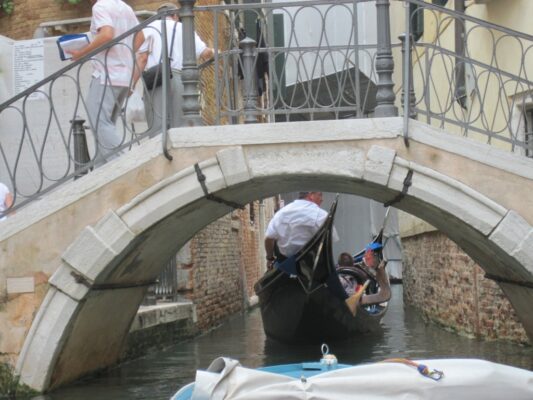
Rowing a gondola at high tide requires some special skills. The higher water makes for lower bridges, and a gondola is not a low profile boat that’ll just go under anyway. The gondoliere have to do all sorts of weird manoeuvres to get the boat under the lowest of the bridges.
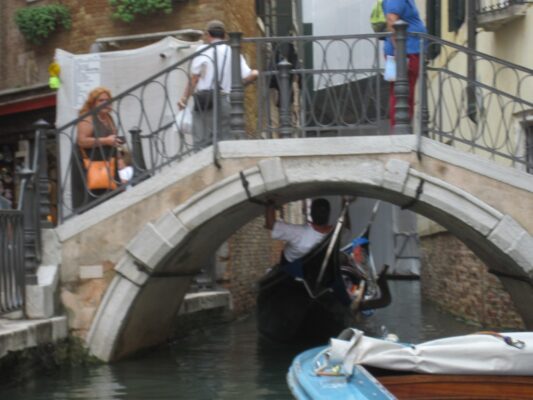
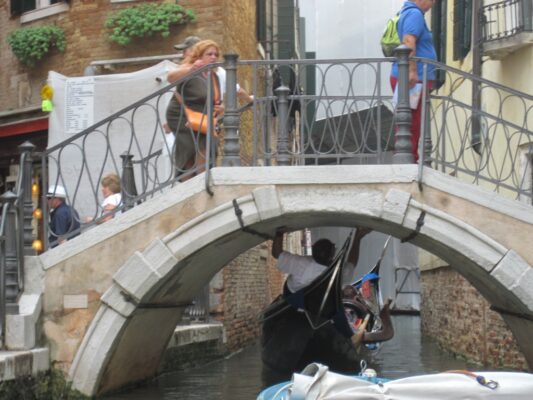
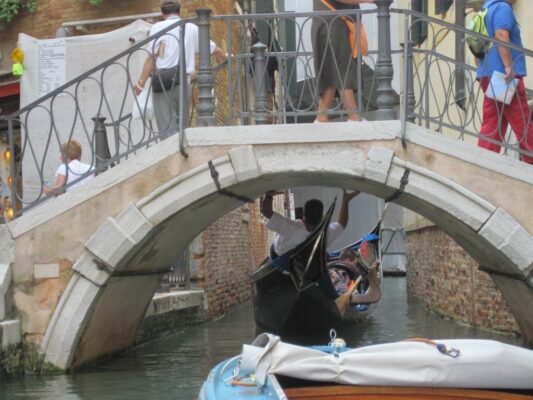
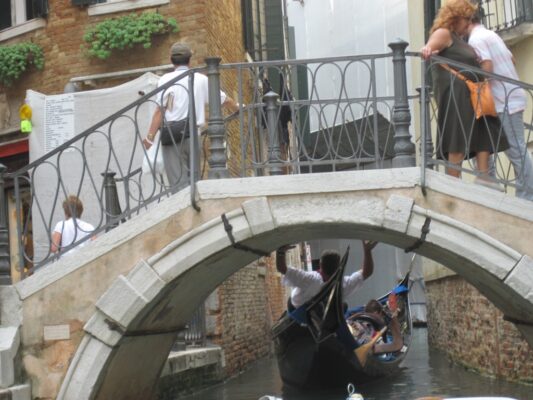
Crouching
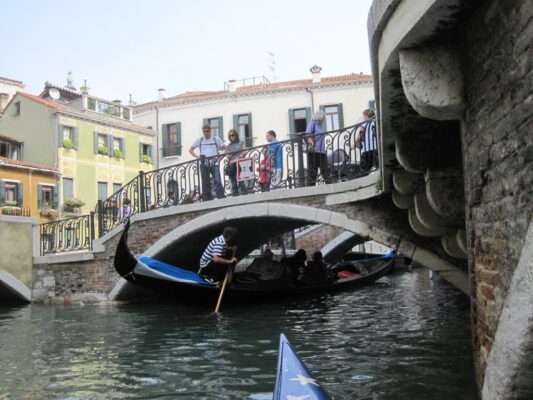
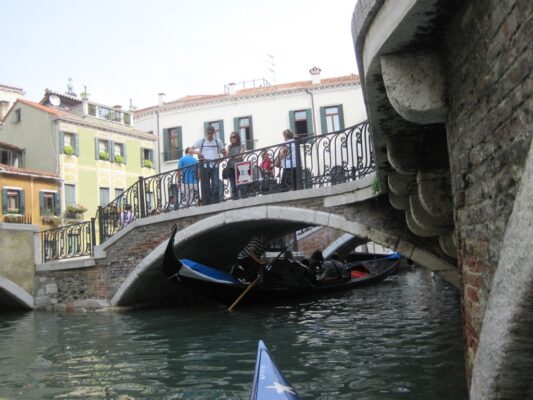
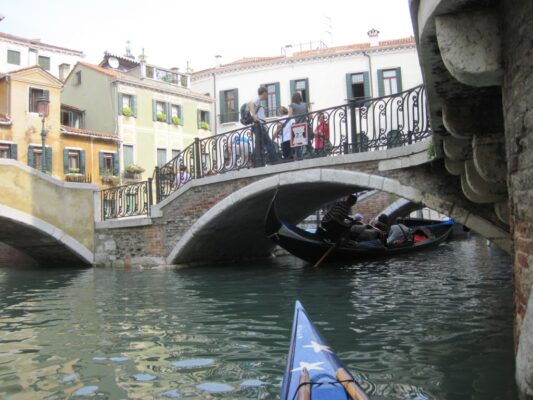
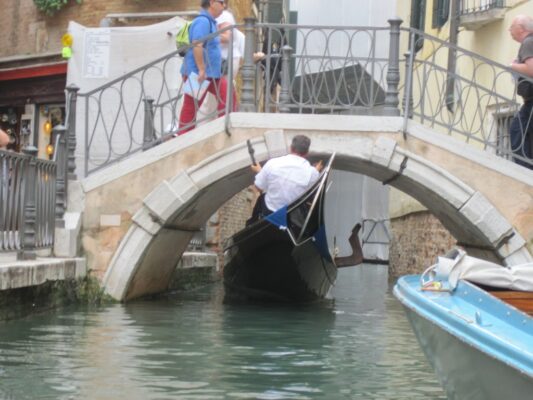
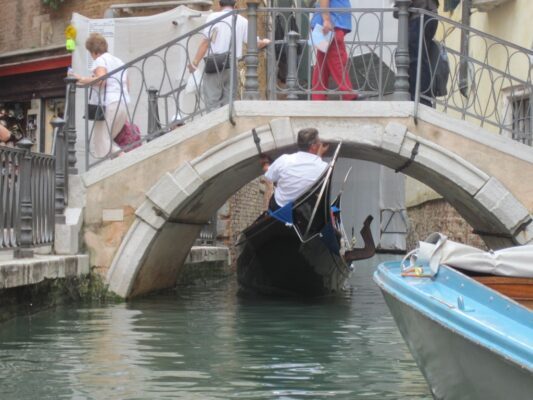
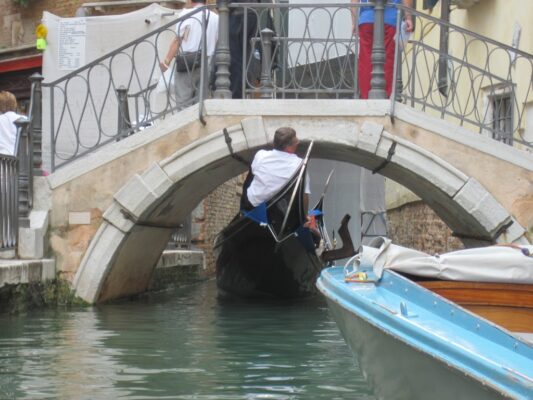
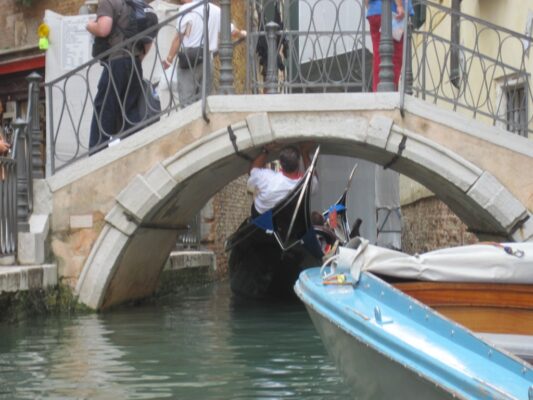
The simplest way of lowering the height of the gondola is for the gondoliere to crouch on the back deck, while he keeps the oar straight backwards, propelling the boat with a sculling movement. The
forcola, or oarlock, has a bend exactly to allow the operation where the oar is almost parallel to the boat.
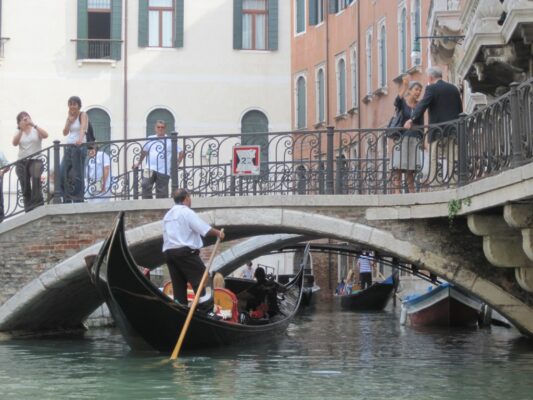
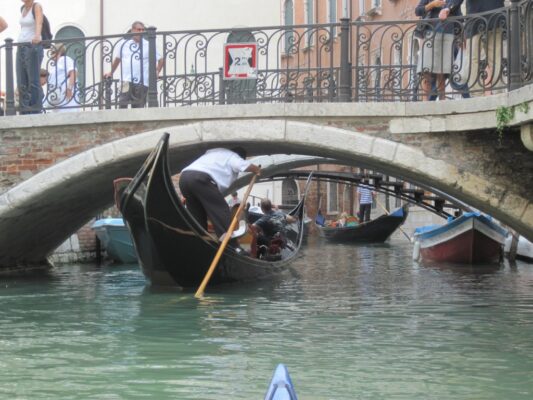
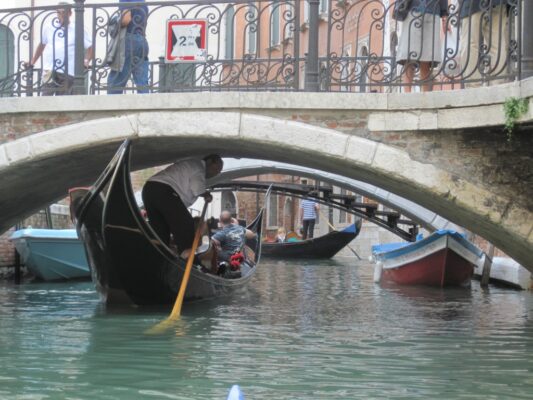
Another example of the crouching gondoliere, same place near Santa Maria Formosa:
Edging
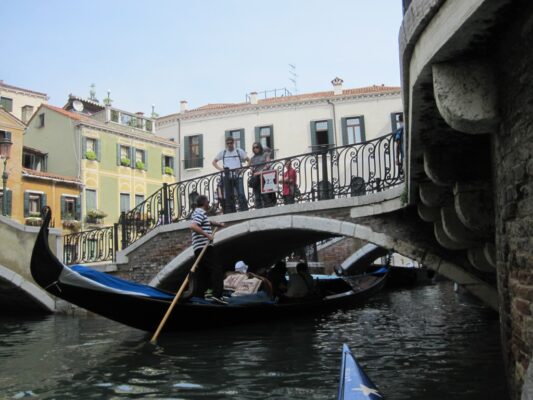
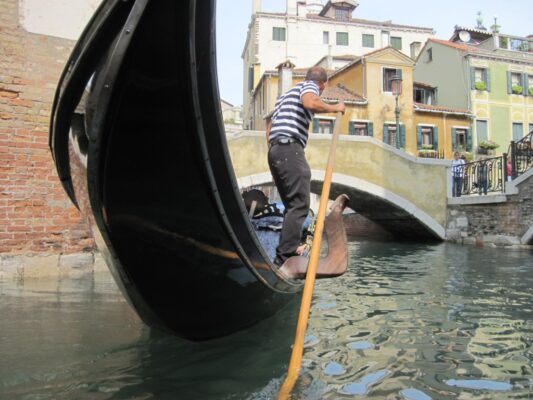
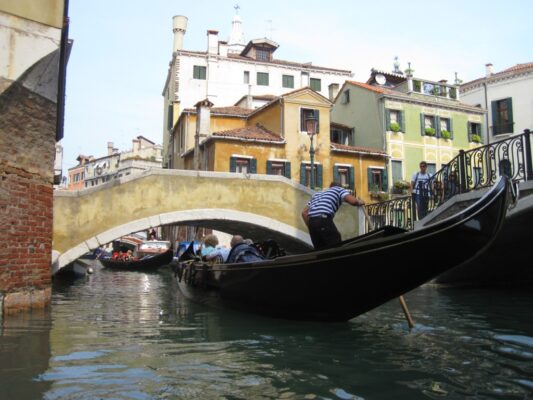
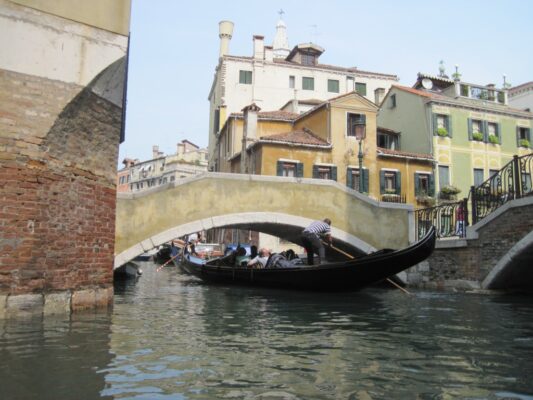
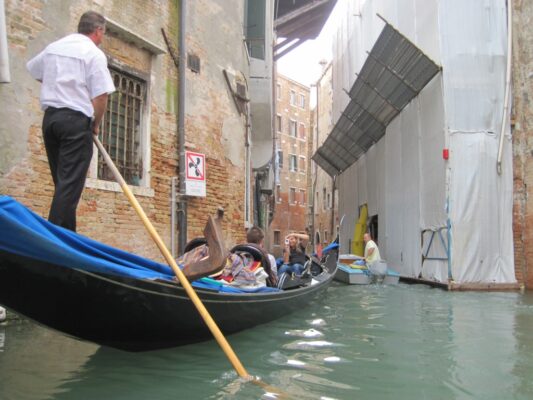
If the bridge is very low, the gondoliere might have to edge to boat to lower the stern
ferro, which is the highest point of a gondola. He will do so by stepping over to the right side of the boat, in front of the
forcola. From that position he will scull the boat forwards. On many gondolas the stern
ferro is on hinges, so it can be flipped down. If the bridge is too low for even the bow
ferro the pass, he will have to edge the boat even more, by telling the passengers to all sit on the right side of the boat.
From Rio del Mondo Nuovo, near Santa Maria Formosa:
Lying down
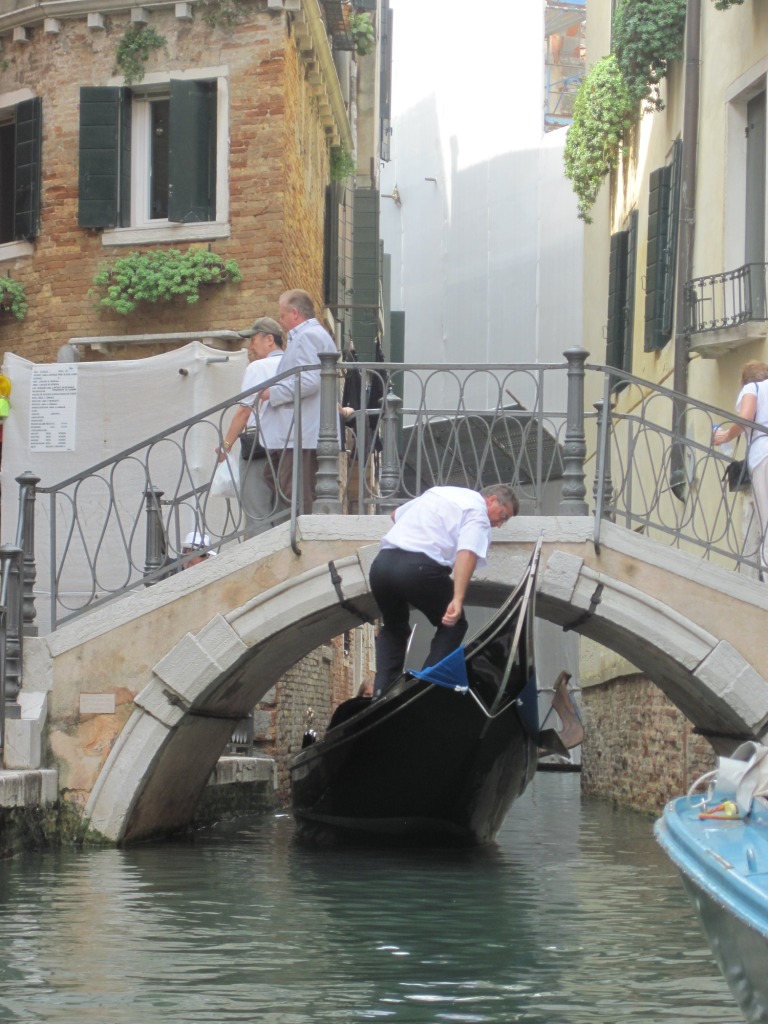
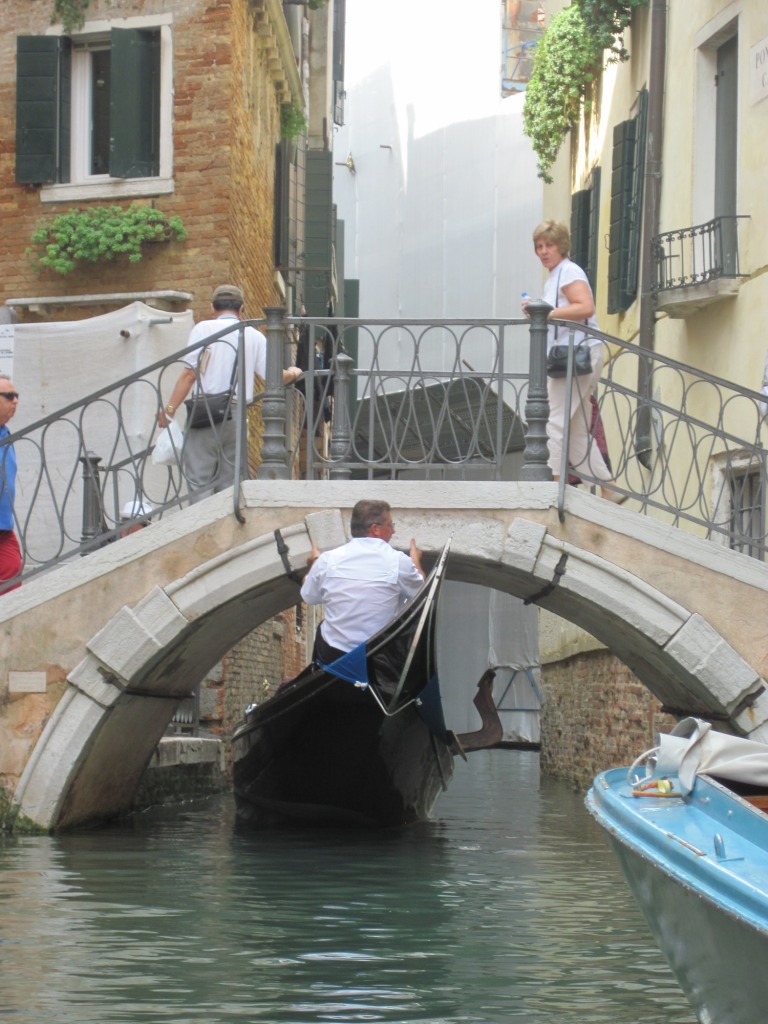
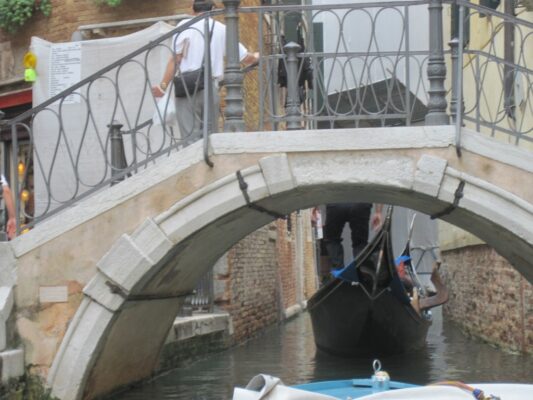
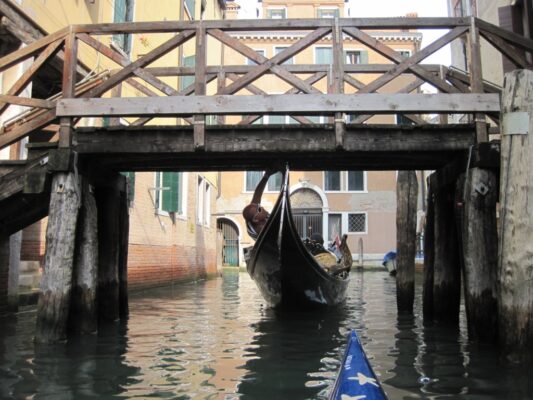
At times the gondoliere will have to pass a bridge where there’s just only enough space to squeeze through, and to make sure that he will not get stuck, with
ferri scraping the underside of the bridge, he will lie down on the back deck of the gondola, and push it along with his hands until the stern ferro is well through the passage.
From Rio San Provolo, S.Marco:

And another case from Rio della Maddalena, Cannaregio:
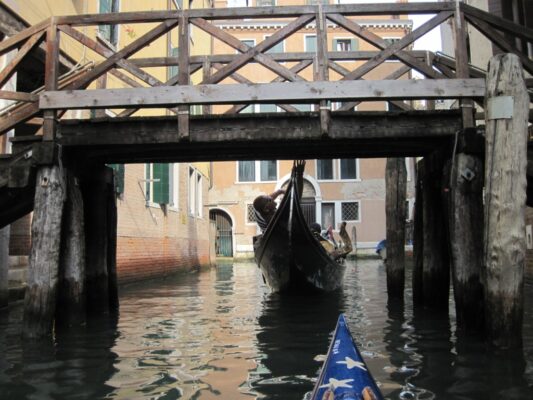
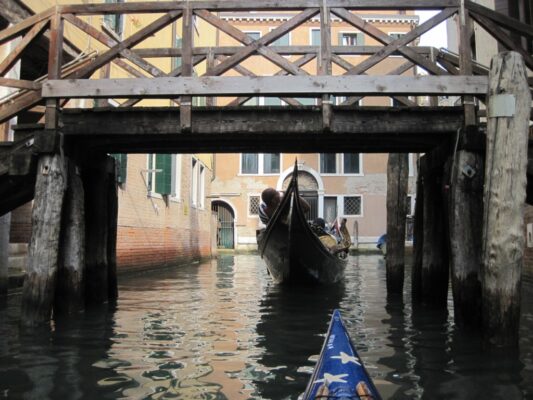
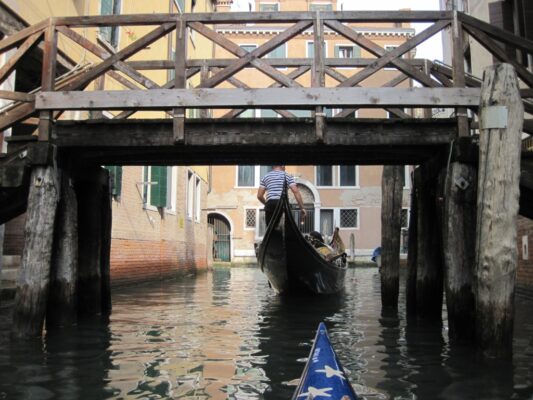


 Another example of the crouching gondoliere, same place near Santa Maria Formosa:


 And another case from Rio della Maddalena, Cannaregio:


Leave a Reply