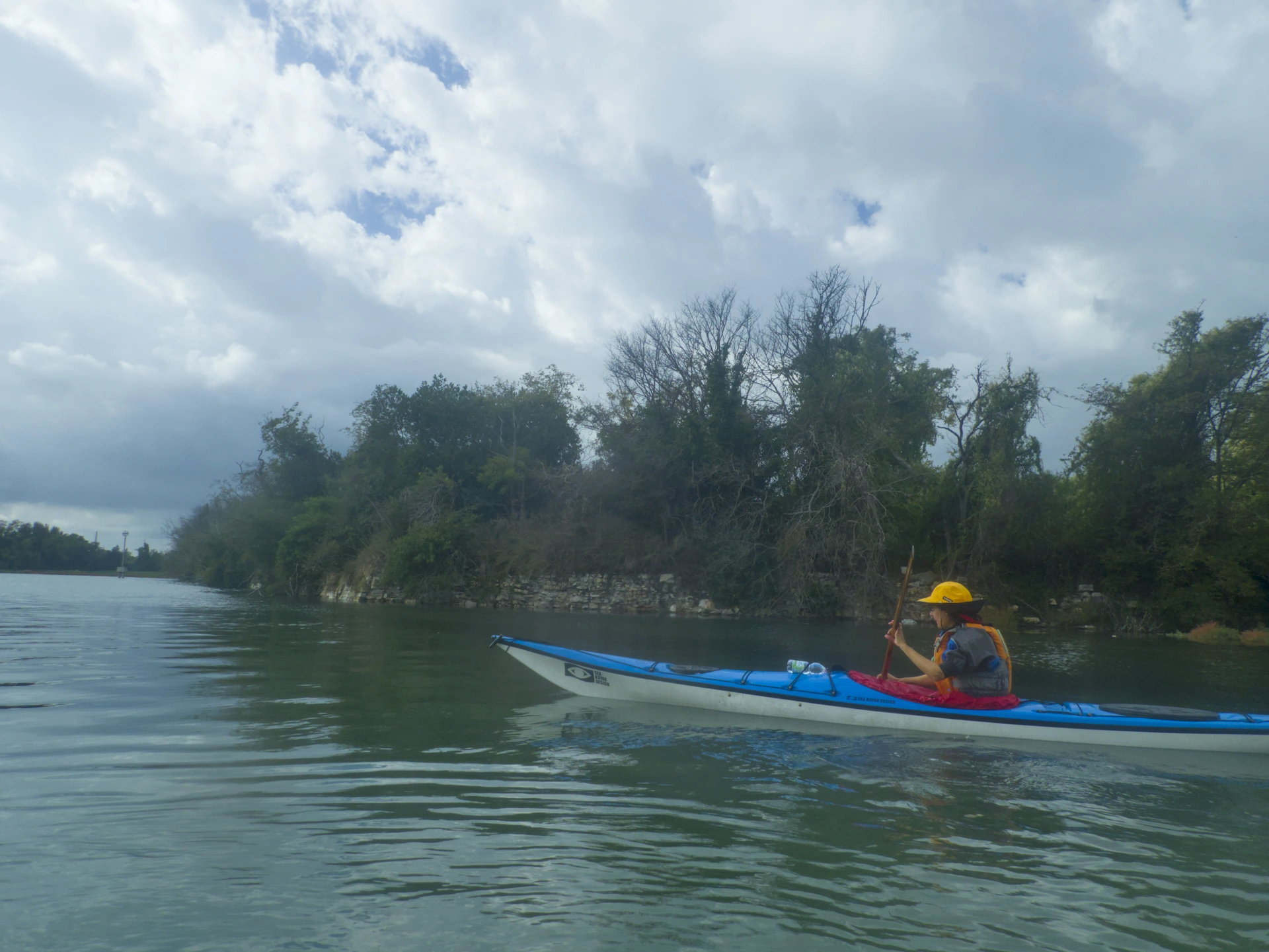
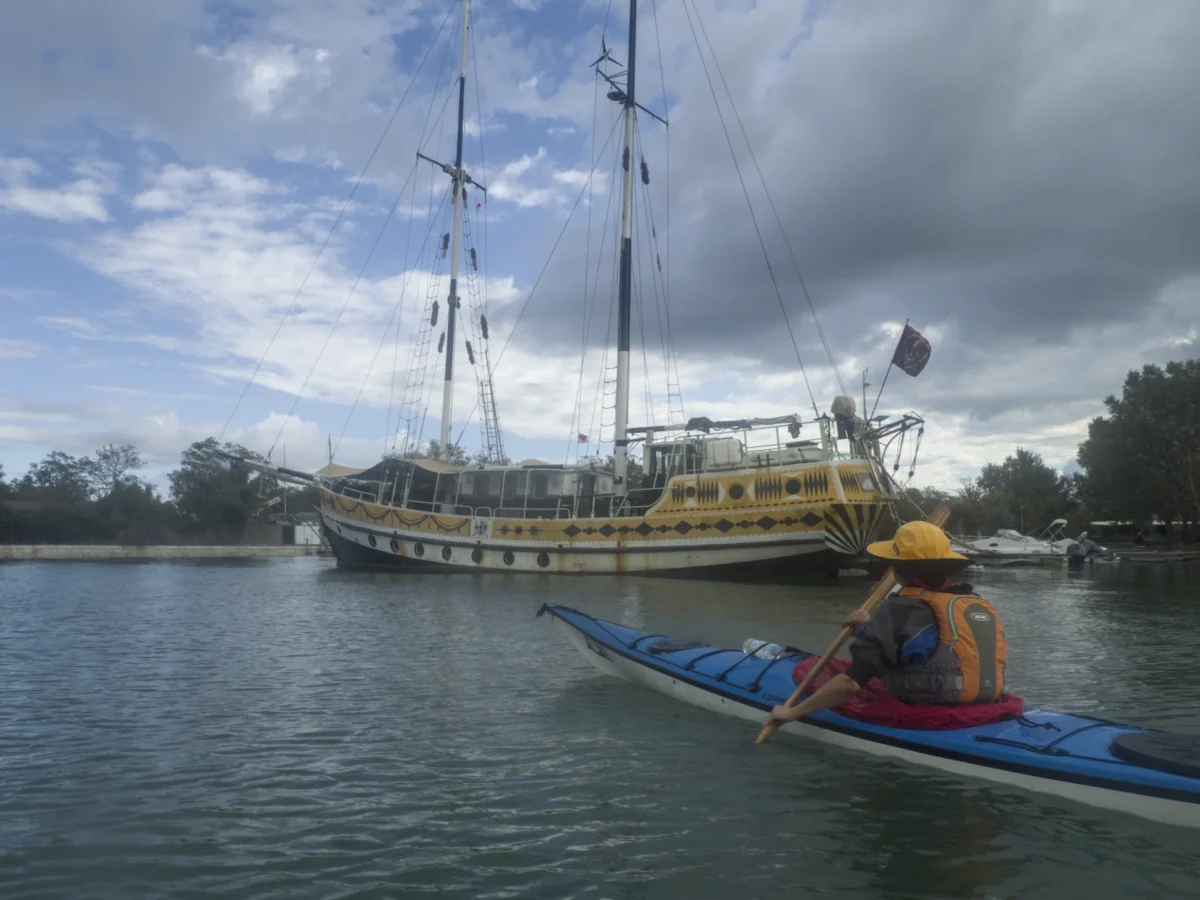
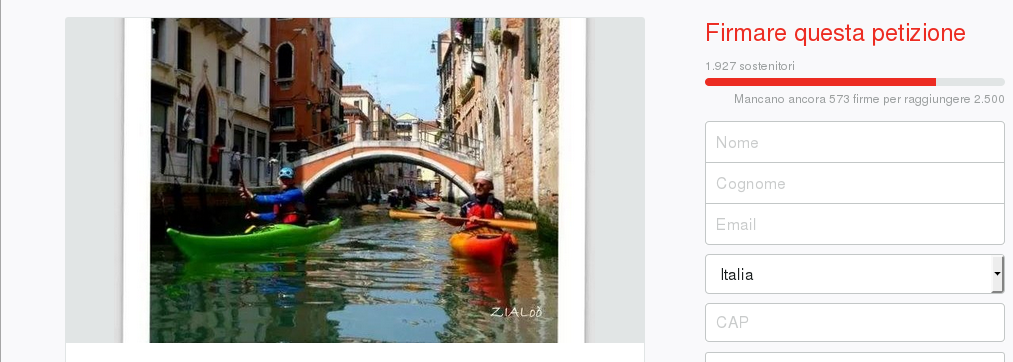
Kayaking in Venice used to be my job, but when that ended, we almost stopped entirely.
Keeping boats in Venice is (absurdly) not easy, but we have found a solution to keeping two kayaks near our home, so we can go paddling for fun and pleasure again.
It is the first time for a long time, that I’ve been paddling just for the pleasure of it, without being responsible for somebody else.
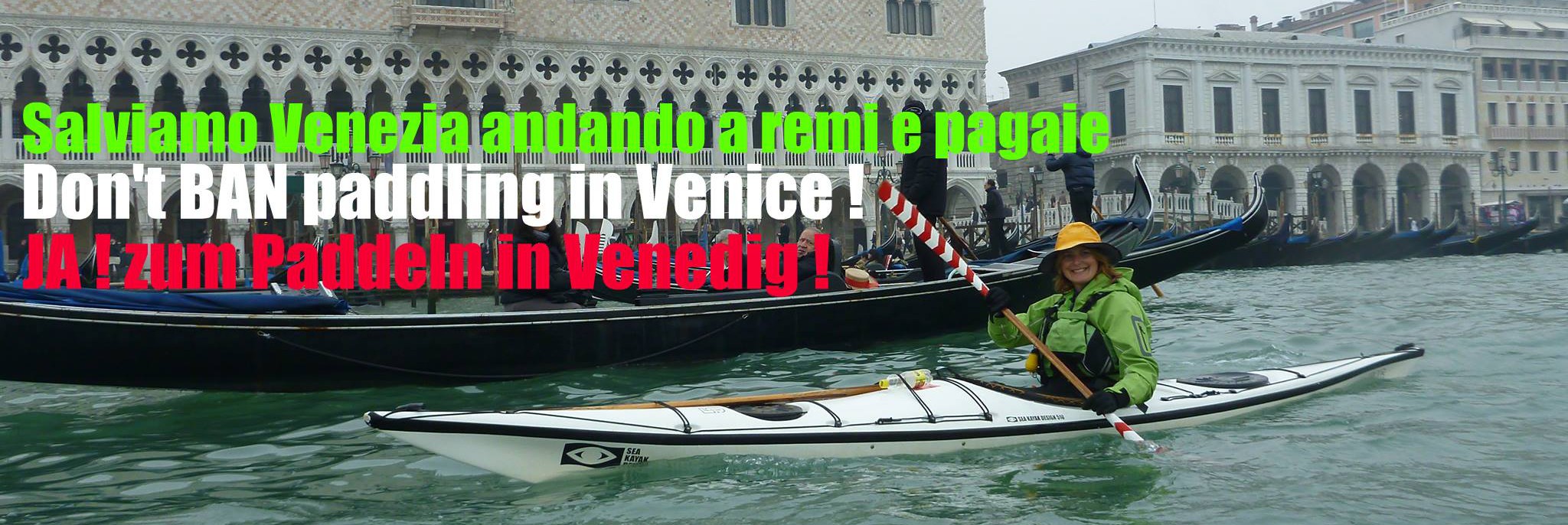
The City of Venice did it again, and issued a ban on kayaking in Venice active from August 1st, 2018. Venice Kayak took the city to court, and won, so the ban is overturned for the time being.
The rules for paddling in Venice city will be moderated from April 20th.
The new rules were decided by the city executive on April 3rd, published officially on April 9th and they’ll be executive ten days after publication.
The kayak/canoe/dragon/sup ban in the Grand Canal and other canals will be reduced to the hours 8am-3pm on weekdays and 8am-1pm on Saturdays. On Sundays and holidays there are no limits.
There’s a series of minor canals designated as “blue” canals, reserved for non motorised boats, running north to south through the city centre, and it will be allowed to cross the Grand Canal in proximity with these “blue” canals, giving precedence to all other traffic, even in the hours where normal navigation on the Grand Canal is banned. In this way it is possible to move about the city also before 3pm on weekdays.
All the rest of the city is available for paddlers at all times.
The new rules seem to indicate that it will be obligatory to carry at all times (also by day) a white light, visible at 360°, to be lit between sunset and sunrise.
The ban has not been lifted completely, but changed from a blanket ban on certain canals to a system of time limits, which is not really different from what gondolas, taxis and goods haulers also have to abide by, so I don’t think we can really complain. We’re not treated worse than other categories of traffic in the city.
All of these groups, together with the Italian Federation for Canoe and Kayak (FICK) and other organisations, are trying in various ways to counter this blanket bans of most paddle crafts in Venice.
A lot of discussion is going on the Facebook group called Salviamo Venezia andando a remi e pagaie.
Most of the discussion is in Italian, but it is open for all interested parties. I try to put in something in English every once in a while, but I’m neither the creator nor an administrator of the group.
Arcobaleno is one of the oldest kayaking clubs in the wider Venice area, and they have been active for many years.
A PayPal account, ricorso@arcocanoa.org, has been set up to collect funds for the legal battle ahead. The needs aren’t huge, all in all, around €3000 will be needed, but it is more than the club and its supporters have.
Even contributions of €5, €10 or €20 will be a help in the fight to keep Venice open for paddlers.
As I have written earlier, the City of Venice has made a partial but extensive ban on kayaks, canoes, dragon boats and others, effective from March 1st, 2015.
The Vogalonga is a rowing event that has been held in Venice every year for the last forty years. It is organised by a non-profit committee, the Comitato Vogalonga.
After the publication of the new regulations on February 11th, everybody expected a reaction from the Vogalonga committee, but they were silent. After much soliciting online, and maybe also offline, they finally made a statement on the 20th, on Facebook but not on their web site, and in Italian only.
The Facebook post received quite a lot of comments, and in there one of the members of the organising committee made a further statement.
I find it important that everybody knows the stance of the Vogalonga committee, so I have reproduced and translated (to the best of my abilities) the two statements below.
First statement (in Italian)
Il Comitato Vogalonga, valutati i vari aspetti della questione e le molteplici proteste anche a livello internazionale, si esprime rispetto all’ordinanza del Comune di Venezia circa la restrizione ad alcuni tipi di natanti a remi, come canoa e kayak, per la circolazione lungo alcuni canali del centro storico.
La congestione del traffico sempre più pressante e l’utilizzo di natanti da parte di persone inesperte e non edotte in merito alla navigazione nei canali interni di Venezia giustifica la presa di posizione del Comune che andrebbe però formulata in senso cautelativo per l’incolumità delle persone più che in senso restrittivo. Quindi, sarebbe auspicabile che i vogatori in questione venissero informati, preparati ed eventualmente accompagnati da persone qualificate prima di affrontare i percorsi cittadini piuttosto che interdire la navigazione a determinati tipi di imbarcazioni.
Rispetto alle proteste che stanno arrivando numerose da parte di circoli e associazioni italiane e da varie parti del mondo, il Comitato Vogalonga, che confida di poter fruire della deroga in occasione della prossima edizione, invita i vogatori a seguire itinerari che corrano nei canali non interdetti del centro storico e lungo i margini dello stesso e che soprattutto li portino a godere degli ampi spazi ed impagabili orizzonti lagunari.
Il Comitato Vogalonga sottolinea anche in questa occasione il proprio impegno per la salvaguardia della laguna e la lotta contro il moto ondoso.
First statement (my translation)
The Vogalonga Committee, having taken into account the various aspects of the question and the numerous protests, also internationally, expresses itself regarding the City of Venice’s new regulations, restricting the circulation of some types of oar driven crafts, like canoes and kayaks, in some of the canals in the city centre.
The ever worsening traffic congestion and the use of boats by inexpert persons, not informed in matters of navigation in the inner canals of Venice, justifies the intervention of the city administration, which, however, should have been phrased in terms of safeguarding the well-being of the persons rather than as a interdiction. Therefore, it would have been desirable that the rowers in question be informed, prepared and eventually accompanied by qualified persons before they embark on routes in the city, rather than prohibiting the circulation of certain types of boats.
With regard to the protests which are arriving in great numbers from clubs and associations in Italy and various parts of the world, the Vogalonga Committee, confident that it will receive a dispensation for the upcoming event, invites all rowers to follow routes which runs in the non prohibited canals in the city centre and along the edges of the same, which will also allow them to enjoy the ample spaces and priceless horizons of the lagoon.
The Vogalonga Committee wants to underline in this occasion too, its commitment to the safeguarding of the lagoon and the fight against wave pollution.
Second statement (in Italian)
This second statement, from a member of the Vogalonga committee and not officially from the committee itself, was in response to a comment of mine, that the committee has thrown in the towel.
Il Comitato Vogalonga non ha gettato la spugna …
La posizione del Comitato (di cui mi onoro di far parte), a differenza di qualcun altro che lucra sul noleggio e sulle visite guidate con kayak a Venezia, è quella di un confronto con la pubblica amministrazione che tenga conto delle esigenze e dell’incolumità di tutti senza prevaricarne i diritti. Il fatto che alcuni canali di Venezia siano eccessivamente trafficati, ha portato alla necessità di rivedere la regolamentazione del traffico interessando tutti i settori della navigazione. Il fatto che qualche mezzo pubblico di linea sia stato fatto fermare in mezzo al Canal Grande perché un paio di kayak a noleggio senza accompagnatore si stessero fotografando vicino al Ponte di Rialto non è da sottovalutare né da demonizzare, ma va presa in seria considerazione. Ovviamente il problema sta nel conducente o vogatore e non nel mezzo che si conduce, ed è su questo che bisogna focalizzarsi.
Il Comitato non è interessato alla sola voga alla veneta a scapito di altri tipi di voga, ne ad ottenere la deroga per la manifestazione (che tra l’altro è già prevista nell’ordinanza anche per altre manifestazioni). La precisazione è stata fatta poiché ci sono state richieste da tutto il mondo in merito al regolare svolgimento della manifestazione.
Prima di prendere una posizione, il Comitato si è confrontato con esponenti delle associazioni e delle federazioni per stabilire una presa di posizione ed è in attesa di un incontro per cercare una mediazione.
La Vogalonga vive grazie ai vogatori e ai sostenitori che vi partecipano e non è una attività commerciale ne sponsorizzata e vuole accogliere tutti i vogatori che amano Venezia e questa manifestazione partecipando e credendo nei valori che cerca di trasmettere.
Fomentare una protesta per salvaguardare la propria attività , come fa qualcuno, non è l’unico modo di affrontare i problemi che vanno prima analizzati e condivisi per cercare primariamente una soluzione condivisa.
Scrivo a titolo personale per spiegare cosa sta alla base delle scelte fatte, non avendo ancora avuto modo di confrontarmi con il resto del Comitato.
Second statement (my translation)
The Vogalonga Committee has not thrown in the towel…
The position of the Committee (of which I’m honoured to be a member), in opposition to other who profit from rental or from guided tours in kayak in Venice, is that of a confrontation with the public administration which takes into account the needs and the well-begin of everybody without infringing their rights. The fact that some canals in Venice has too much traffic, has lead to the necessacity of a revision of the regulations of traffic, with regard to al the sectors of navigation. The fact that some public transport vessels have been forced to an emergency halt in the middle of the Grand Canal because a couple of rental kayaks without a guide had stopped to take photos of the Rialto Bridge from close up, should be nor underestimated, neither demonised, but taken seriously into consideration. Obviously the problem is the pilot or the rower and not the vessel conducted, and focus should be on this.
The Committee is not exclusively interested in Venetian rowing at the cost of other types of rowing, nor in obtaining a dispensation for the event (which is already foreseen by the new regulations also for other events). This is underlined because there have been inquiries from all over the world about the execution of the upcoming event.
Before taking a stance the Committee has met with representatives of associations and federations to to find a common stance, and it is currently waiting for a meeting in search of a compromise.
The Vogalonga Committee lives thanks to all rowers and supporters who participate, and it is not a commercial activity, neither sponsored, and it wants to welcome all the rowers who love Venice and this event, participating and believing in the values it tries to transmit.
Instigating protests to save one’s own business, as some do, is not the only way to confront the problems, which should frist be analised and shared searching primarily for a compronise.
I write this on my own account to explain what is behind the choices made, as I have not yet had the possibility of hearing the rest of the committee.
The City of Venice has published a modification to the city traffic rules, which bans kayaks, canoes, dragon boats and others from navigating certain canals.
The relevant text is this:
Nei Rii principali interni di collegamento: Canal Grande, Cannaregio, Giardini, Greci – San Lorenzo, Santa Giustina – Sant’Antonin – Pietà, Noale, Novo, Ca’ Foscari, Santi Apostoli – Gesuiti, è vietata la navigazione dei natanti denominati jole, dragon boat, pattini, pedalò, canoe, kayak e tavole a vela e/o a remi.
It lists a series of city canals where “navigation is prohibited” for a series of paddled and rowed types of boats.
Navigation is prohibited
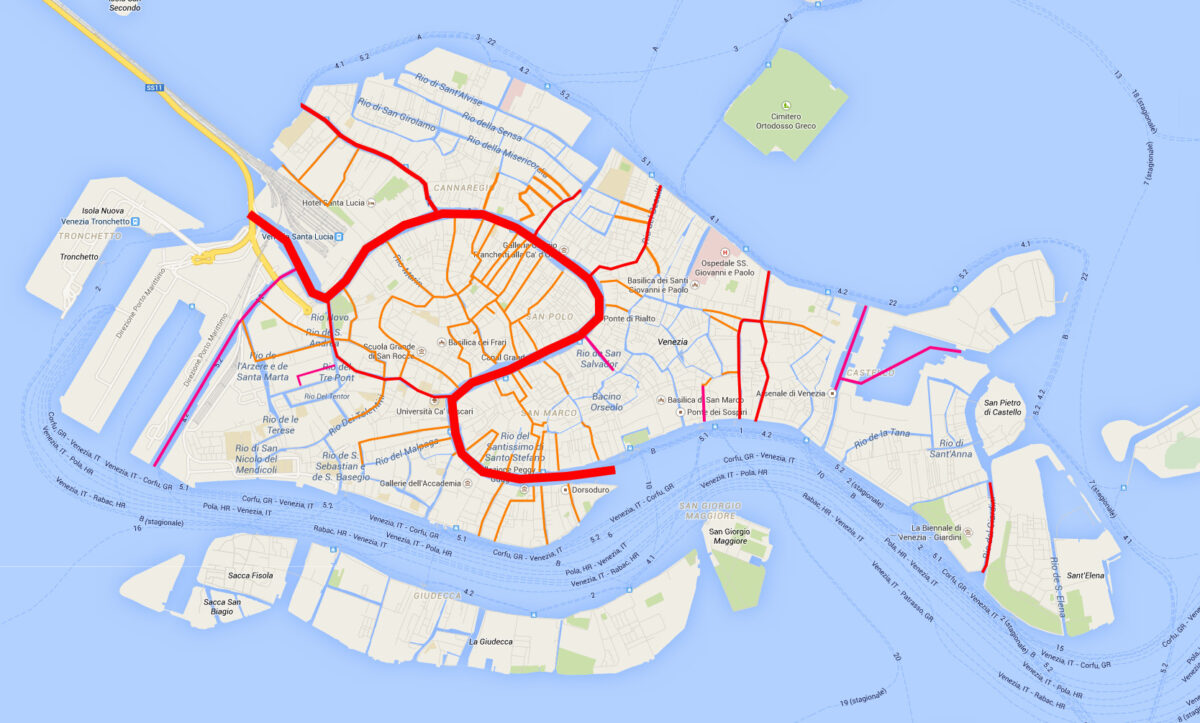
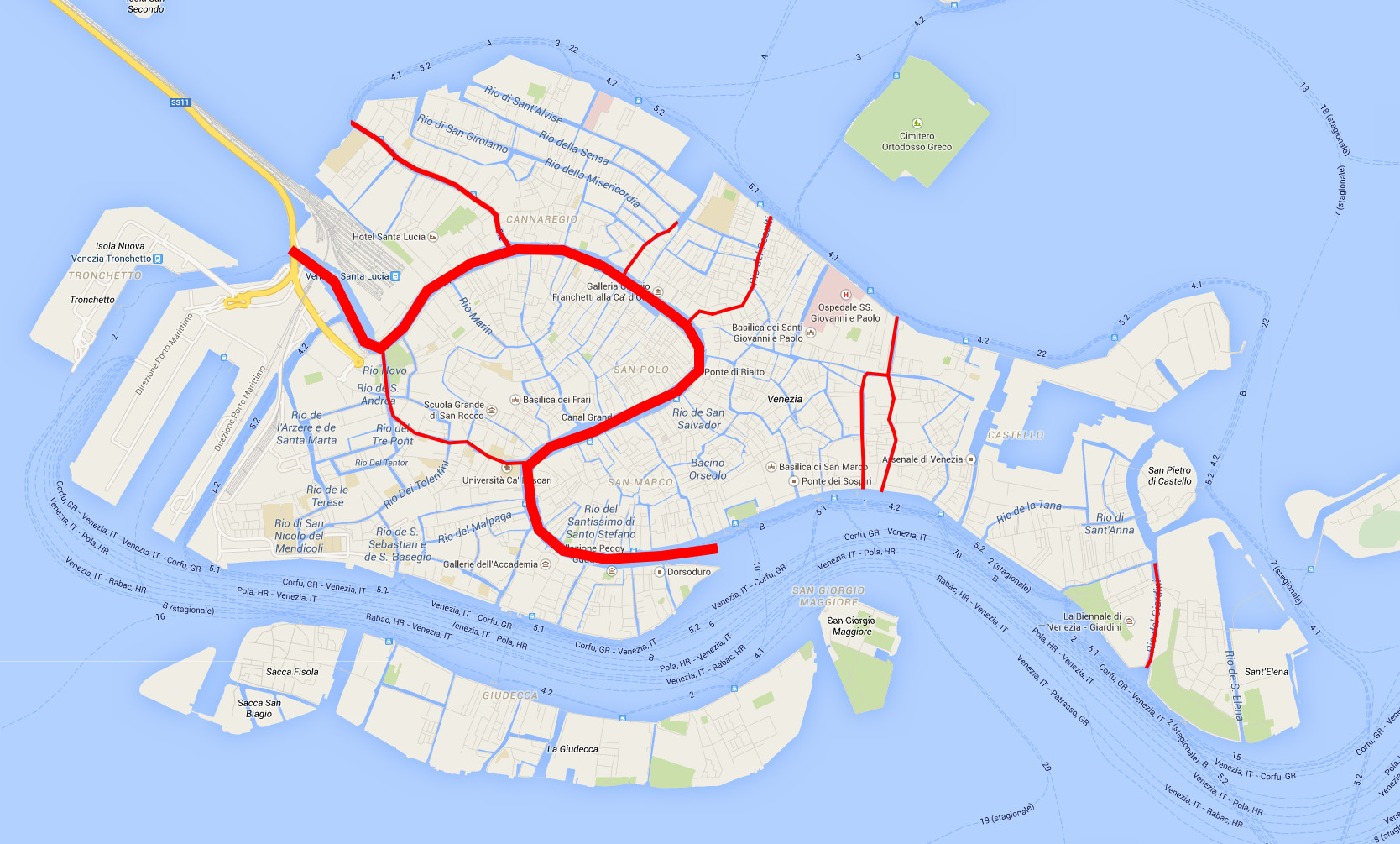
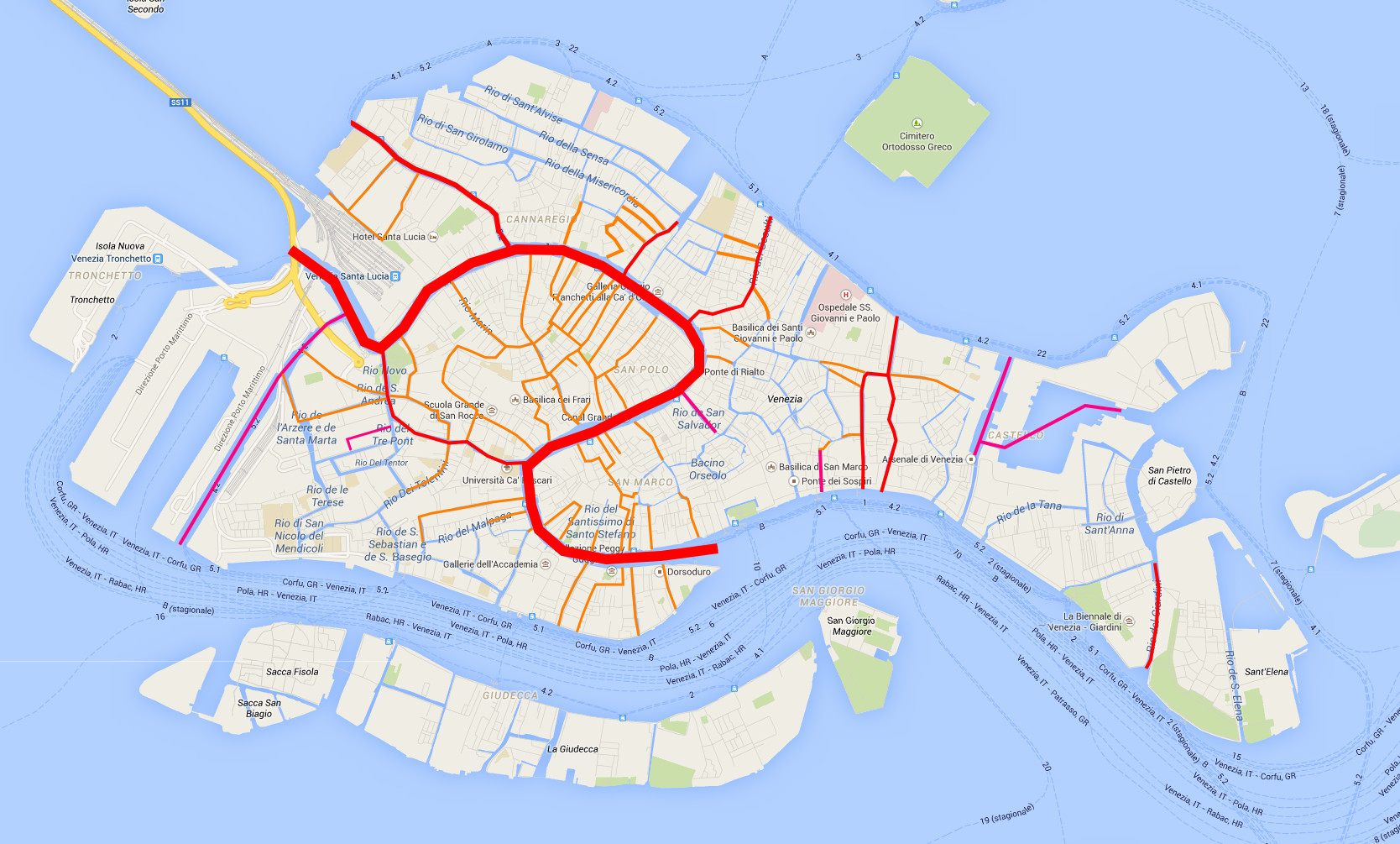
The canals in question are these, coloured red.
Now, besides the Grand Canal it doesn’t look excessive. There are a few other restrictions on traffic, not specifically targeted at kayaks and the like, for military areas, heavy traffic, or dedicated areas for the gondolas.
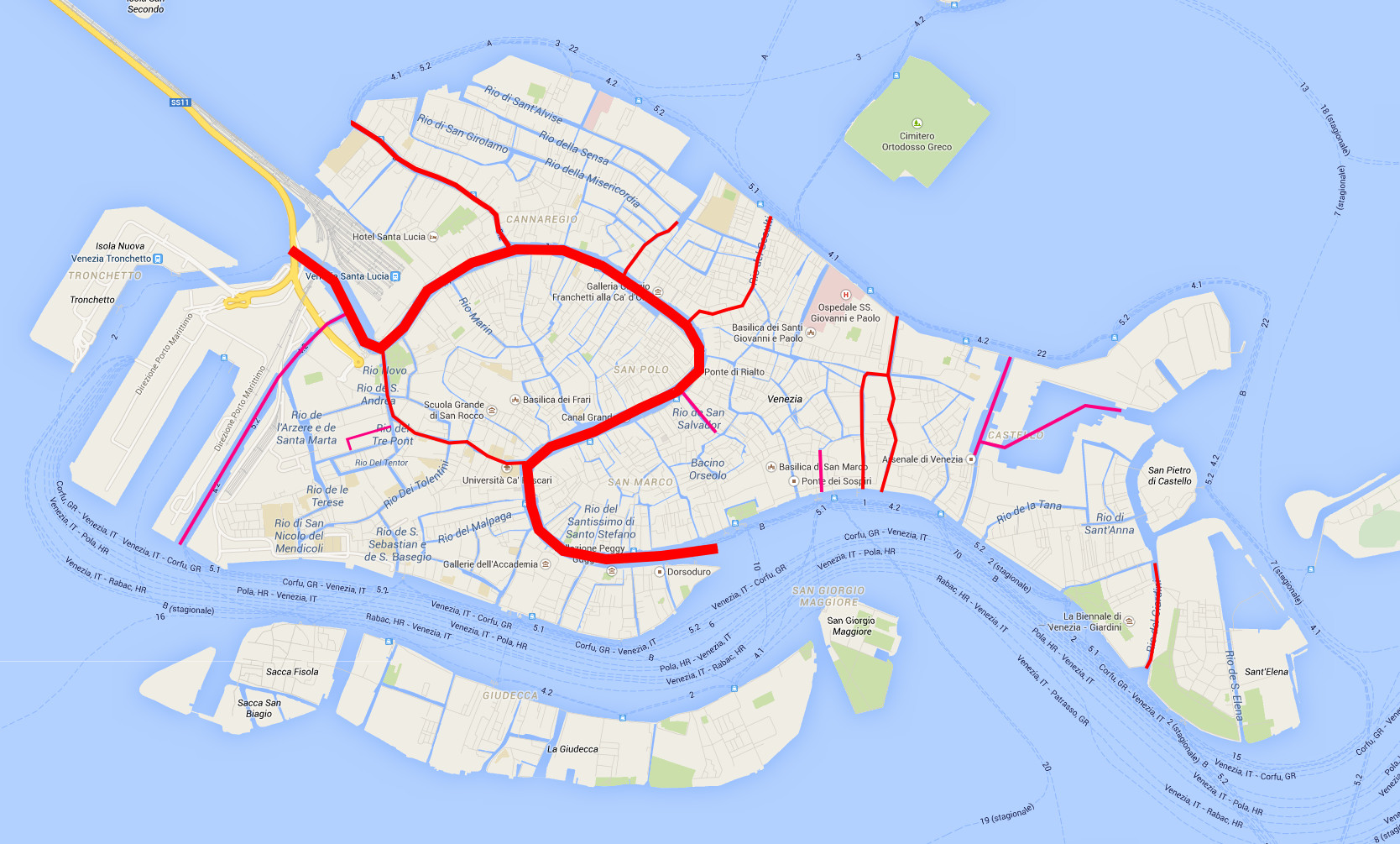
With these added (in violet) the map of the no-go canals become:
The canal network in Venice is Medieval in origin, and anything but regular. Some are very interconnected, others are detached from most others. A lot of very narrow canals lead down to some of the no-go canals, so if you went down there in a kayak, you wouldn’t be able to get out legally.
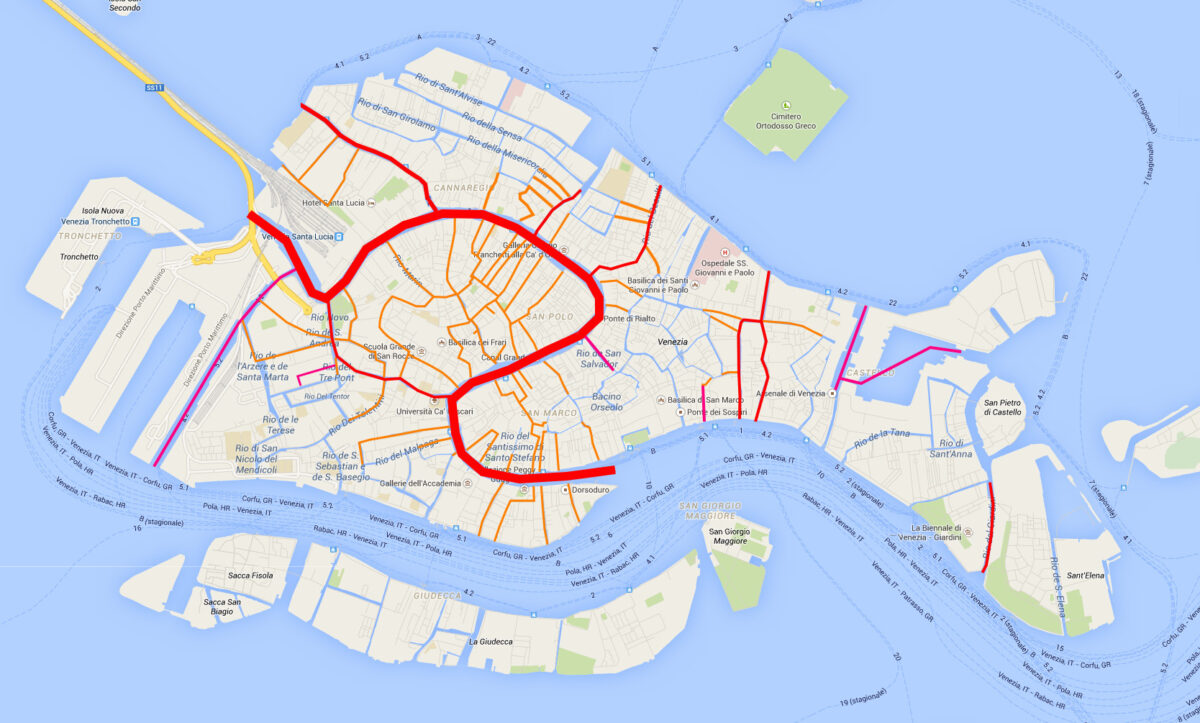
Therefore, the ban is for more than just the listed canals. The de facto banned canals are added to this map in orange.
Now, that’s a good deal more.
If you enter one of these nominally ‘legal’ canals, you won’t be able to get out again, unless you paddled backwards through a narrow, winding and possible busy canal.
The above map is made under the assumption that “navigation is prohibited” in the canals marked in red, which would mean that you can’t even paddle across.
If the city were to allow crossing of some of the no-go canals in some places, the map above would have to be changed, but with the current wording of the regulation, it will not be possible to go in kayak in any of the canals on the map above, which are marked in red, violet or orange.
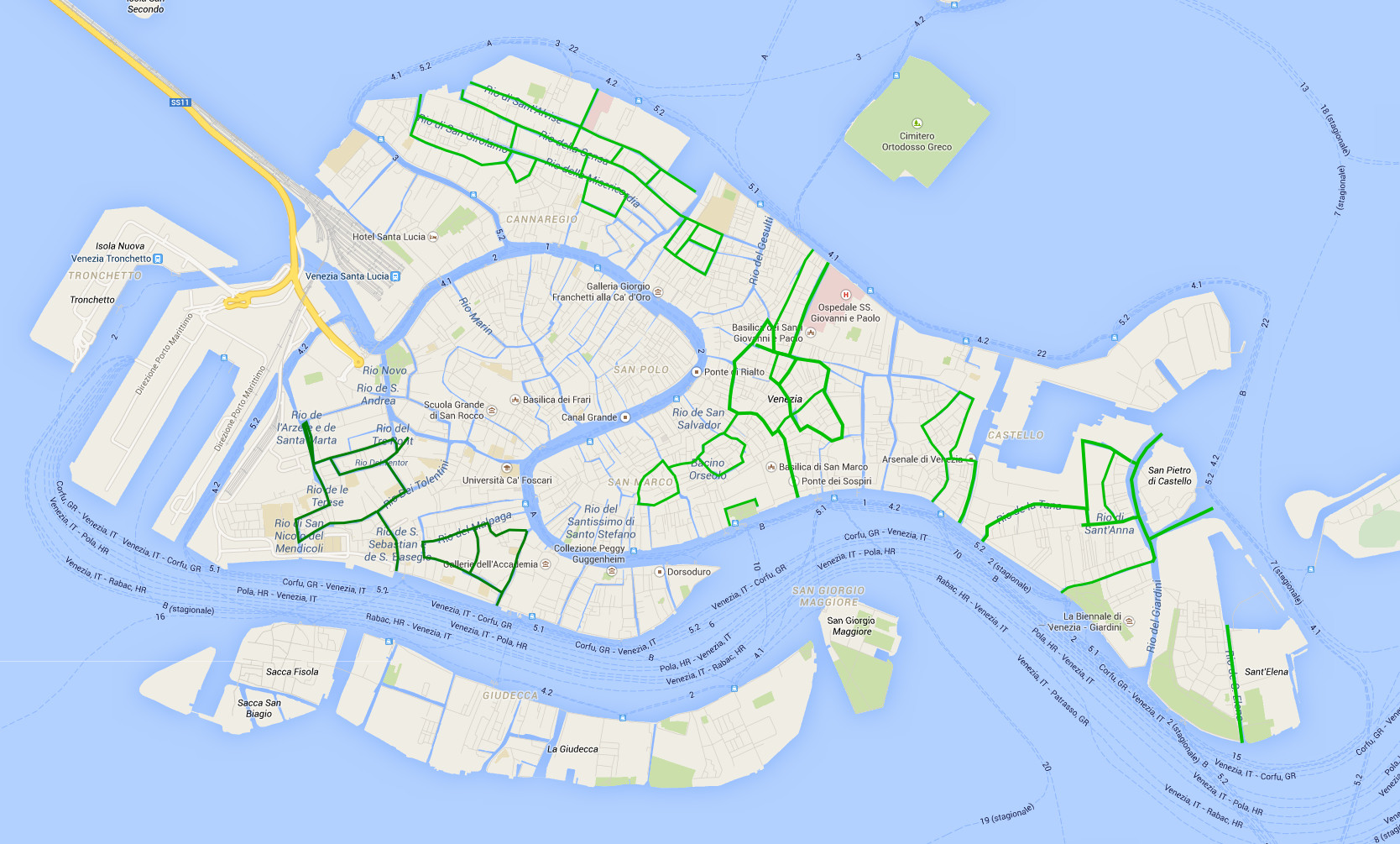
I realise that it is hard to see from that map where you can actually go, so I have made the reverse map which shows in green the canals where you can go in a kayak and still have a legal way out.
As is apparent, after the introduction of the new regulations you can only paddle in a few separate and non contiguous areas of the city.
As before, this map relies on a strict interpretation of the wording of the new regulations, where we’re not allowed to traverse any of the no-go canals.
There are six distinct zones, where you’ll need to get out of the city canals, potentially in some very busy waters, to get from one area to another.
Safety issues
The two areas in Dorsoduro (marked in a darker green) are only accessible through the Canale Giudecca, which is where the big cruise ships pass. It is a very busy canal, and not safe for even intermediary level kayakers.
To move from the eastern part (Castello basso) to the central part around San Marco, it will be necessary to cross the Bacino San Marco, which is likewise very busy. Besides a large number of water buses and taxis, this area is also full of large tourist tour boats, which moor there for boarding and disembarking. Paddling through there will too require a good deal of skill and nerves.
And let’s remember the new rules are introduced for safety reasons.
To keep us and everybody else safe, they send us out in the middle of the busiest parts of the city. And not just busy, but busy with far larger boats that are ever allowed inside the city, even on the Grand Canal.
Curious as to why they have decide this? Look here.
We’ve had several days with high water lately here in Venice. Not extreme high water, but enough to be a burden for the locals and an amusement for the tourists.
The city canals are very quiet when the tide goes above a certain level, as most boats can no longer pass under the bridges, and we had planned to go paddling to enjoy having the city’s waterways mostly to ourselves.
First thing to notice is that at high tide there is quite a bit of rubbish and other stuff floating around, like this part of a bridge or dock.
Give the lack of traffic we quickly gravitated towards San Marco, here from the front.
Here’s a gondola stuck under a bridge by the rising water, just behind Piazza San Marco.
This is the view from the canal behind the square onto the Piazza San Marco. This is the lowest point level entry to the square, but there is far to little water to do any kind of stupidity.
I got out of the kayak and walked in though the water and found this view.
Flooding in Piazza San Marco starts in front of the basilica at a very normal level of 75-80cm, and at a level of 110cm there are up to 30cm of water on parts of the square.
Just because you can paddle in, doesn’t mean you can’t get in. While I was surveying the situation, one of the others came in pulling the kayaking along, just to get a few photos.
One then drags the next person in.
While not exactly legal, the situation does create some photo ops.
Second kayak in the Piazza San MarcoSecond kayak leaving Piazza San MarcoKayak and reflection
Which a good deal of others onlookers weren’t late to spot.
Some people like the attentionPhotographer on the huntSome people still like the attention
The others waited patiently for those fifteen minutes of fame (or infamy) to pass.
While tourists in their tourist high water protection gear watched baffled.
After San Marco the tour went to the Grand Canal and the Rialto where the Erberia was covered in a bit of water.
Somebody managed to get interviewed by national television (again).
(screencapture from a video)
On our way back, passing San Marco again, we met this gondola.
Which carried a rather untraditional addition to the stern.
The water level was still high, and the gondola couldn’t pass the first bridge after the Bridge of Sighs, and had to turn around while we waited.
Most of the fondamenta (sidewalks) had water up at the edge, which usually corresponds to a water level of between 100cm and 110cm.