Category: Living in Venice
About my experience of living in Venice
-
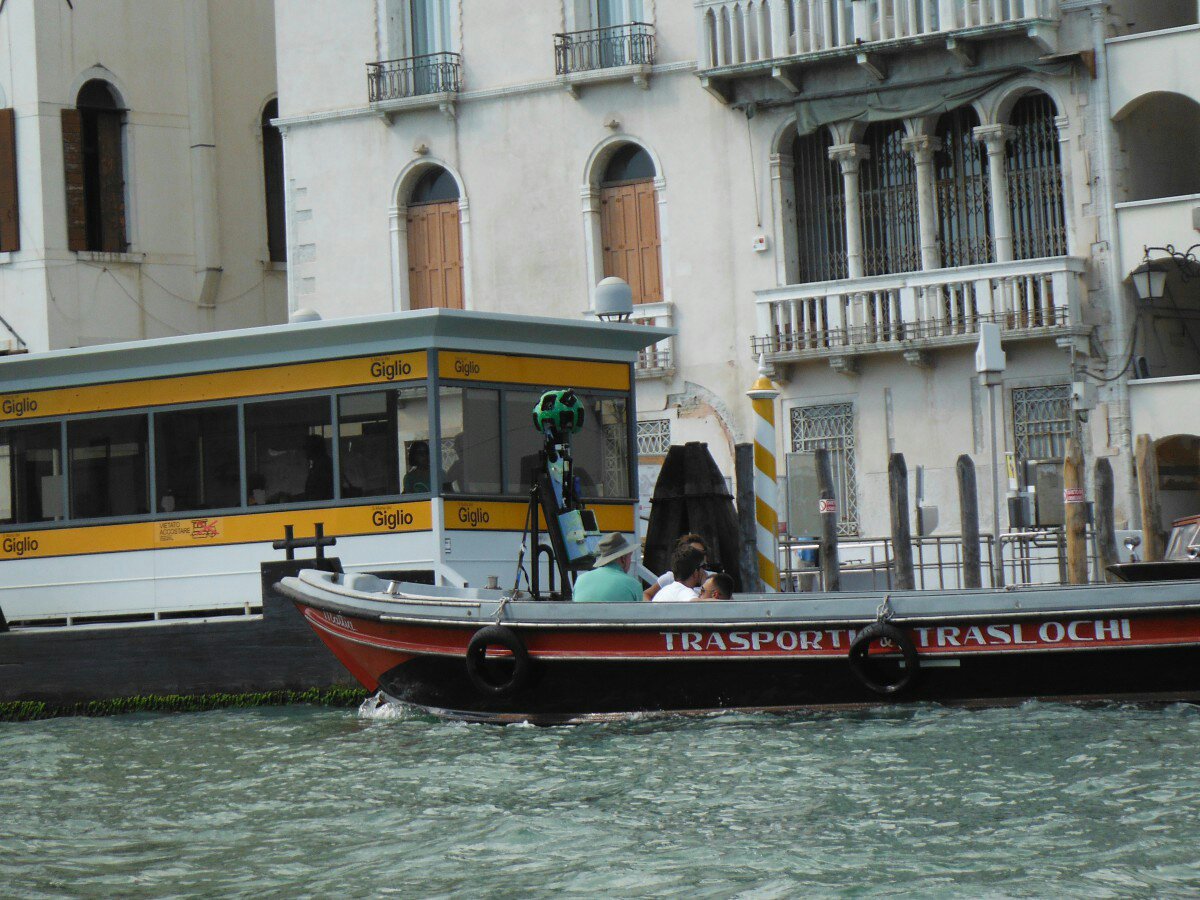
Google Canal view
Google has launched Street View for Venice, and also Canal View. In the limited space available in Venice, both on land and on water, it was hard not to notice the cameras, which were taken around the city on special back packs and on boats. We spotted this boat on the Grand Canal in August.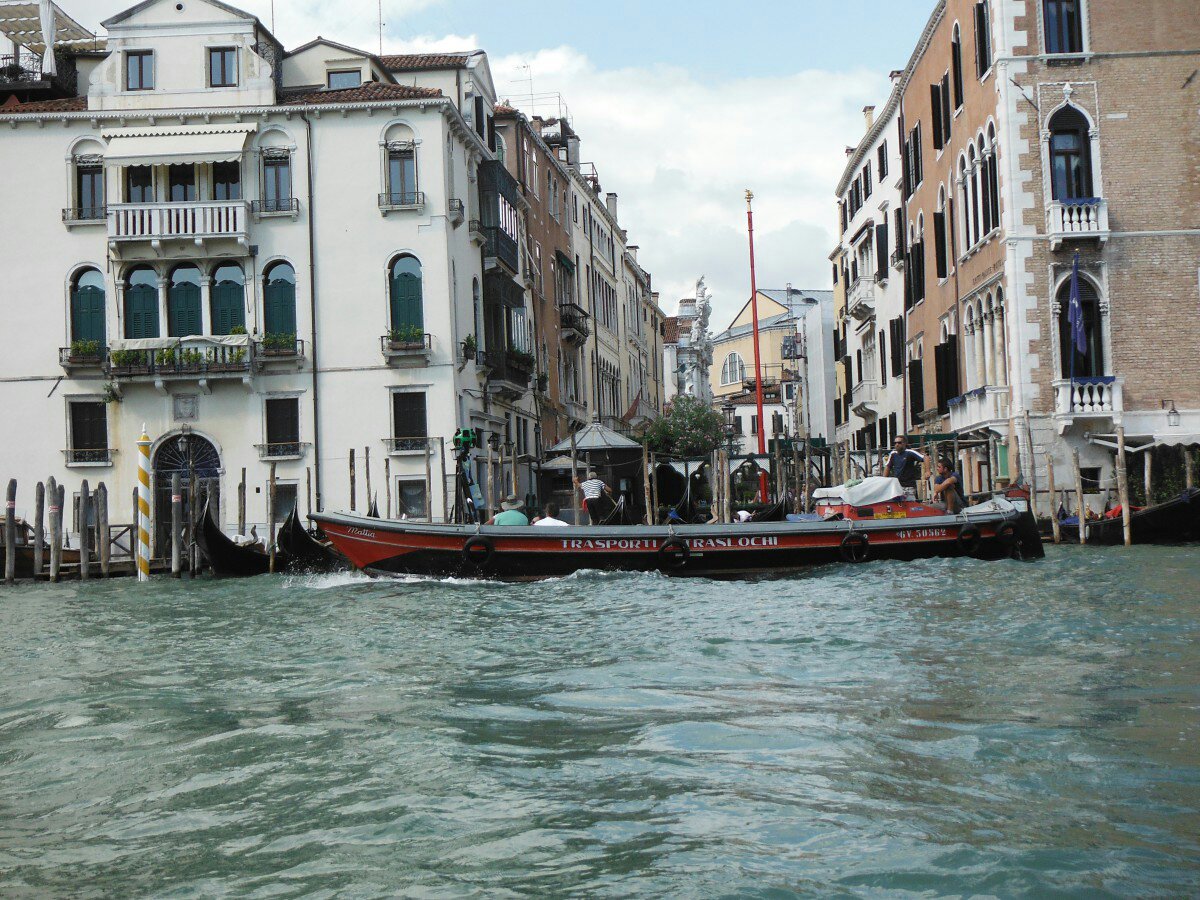
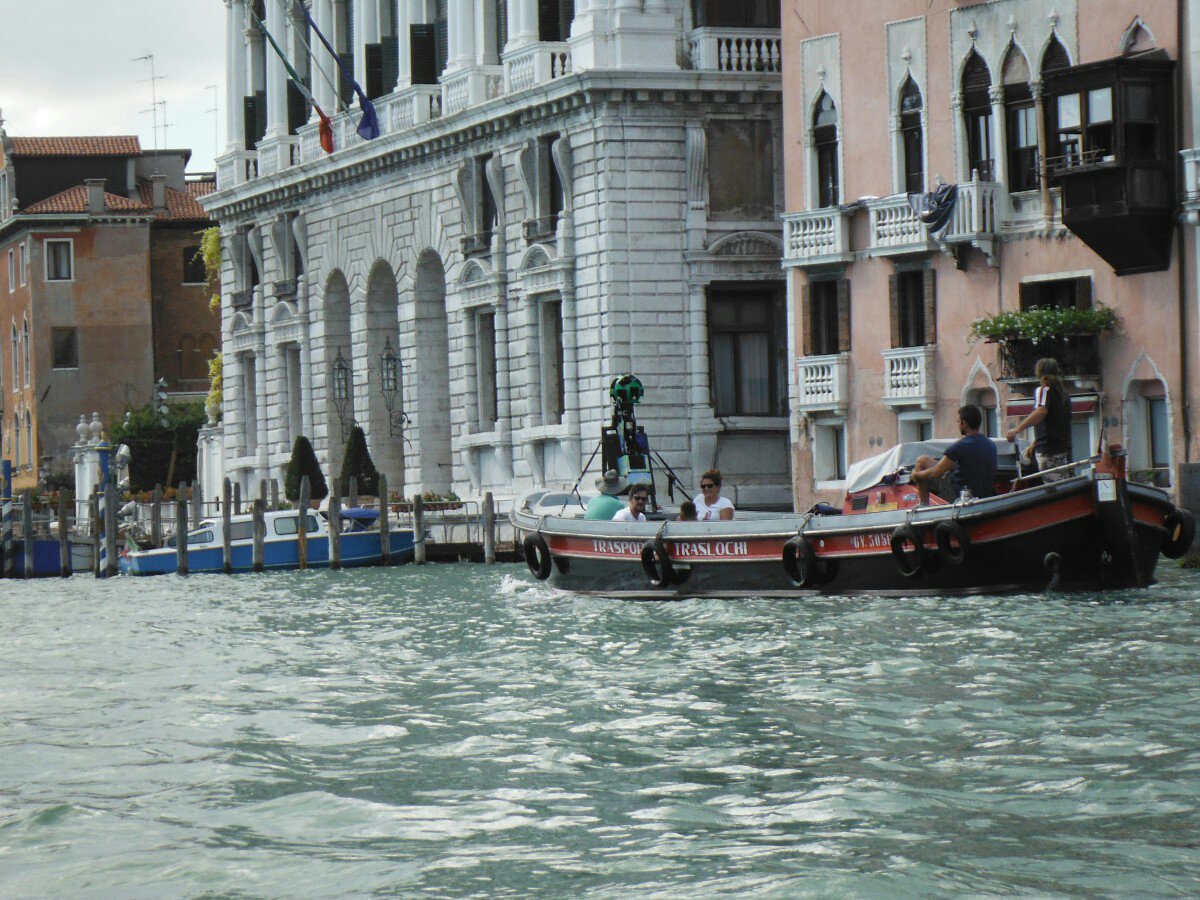 Obviously, given the nature of Google Street View (or rather Google Canal View) they also spotted us.
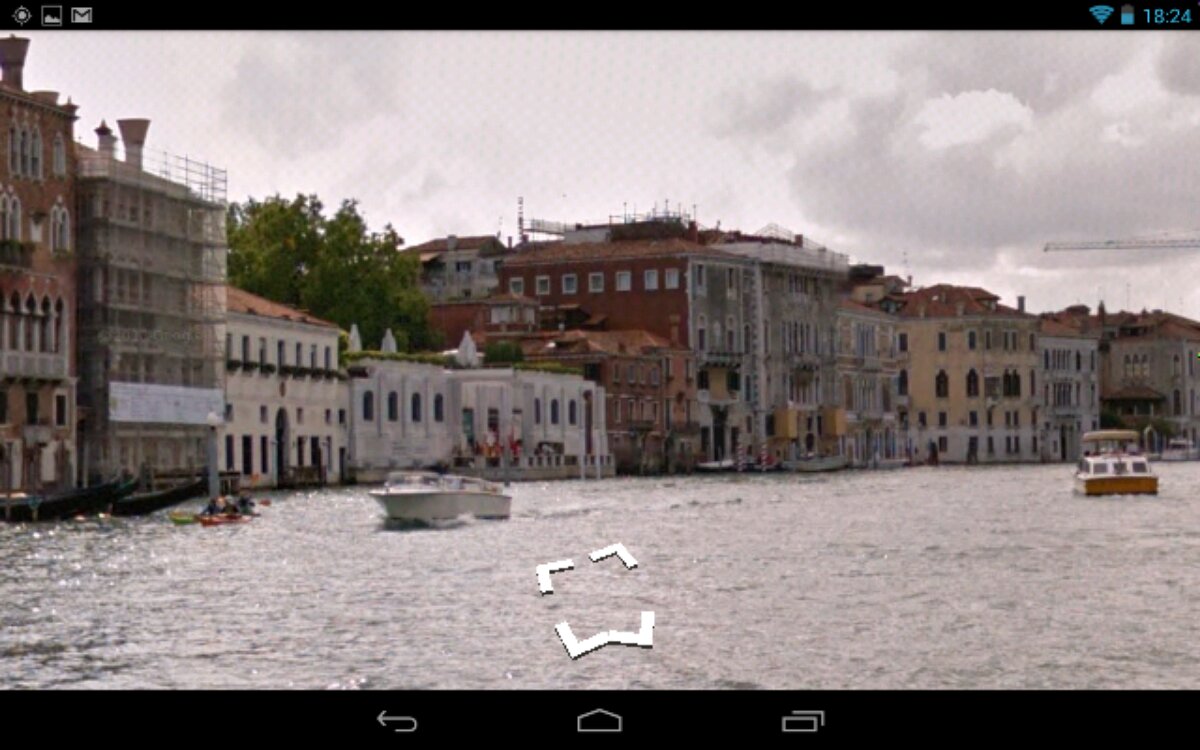

 These are screen shots from an Android tablet.
On land
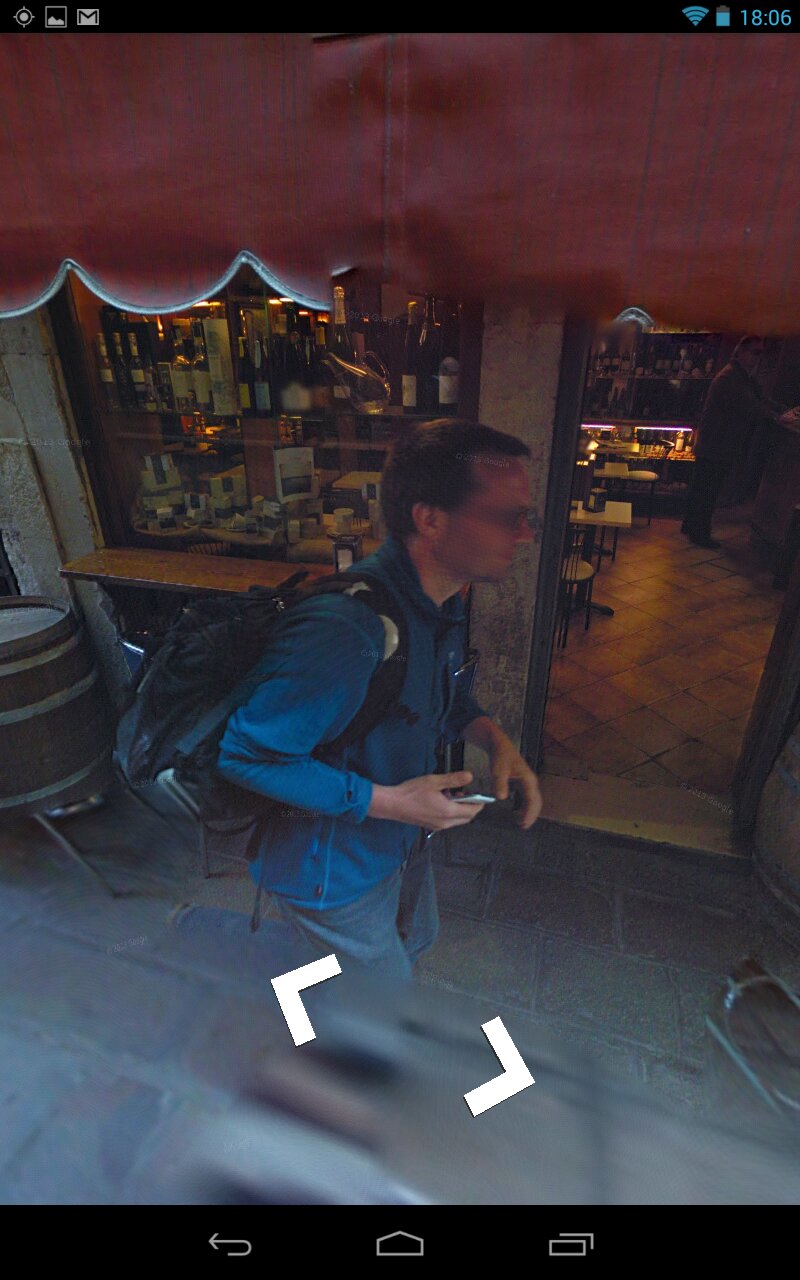
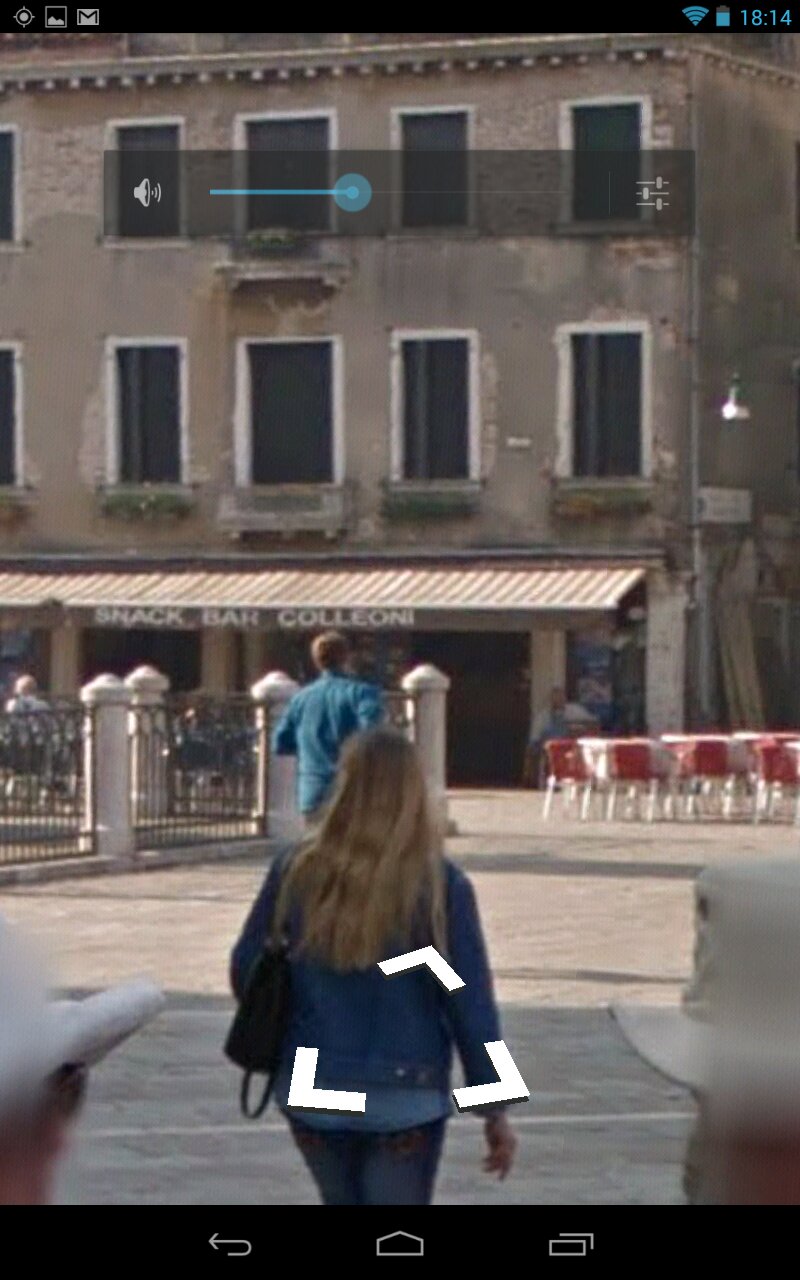
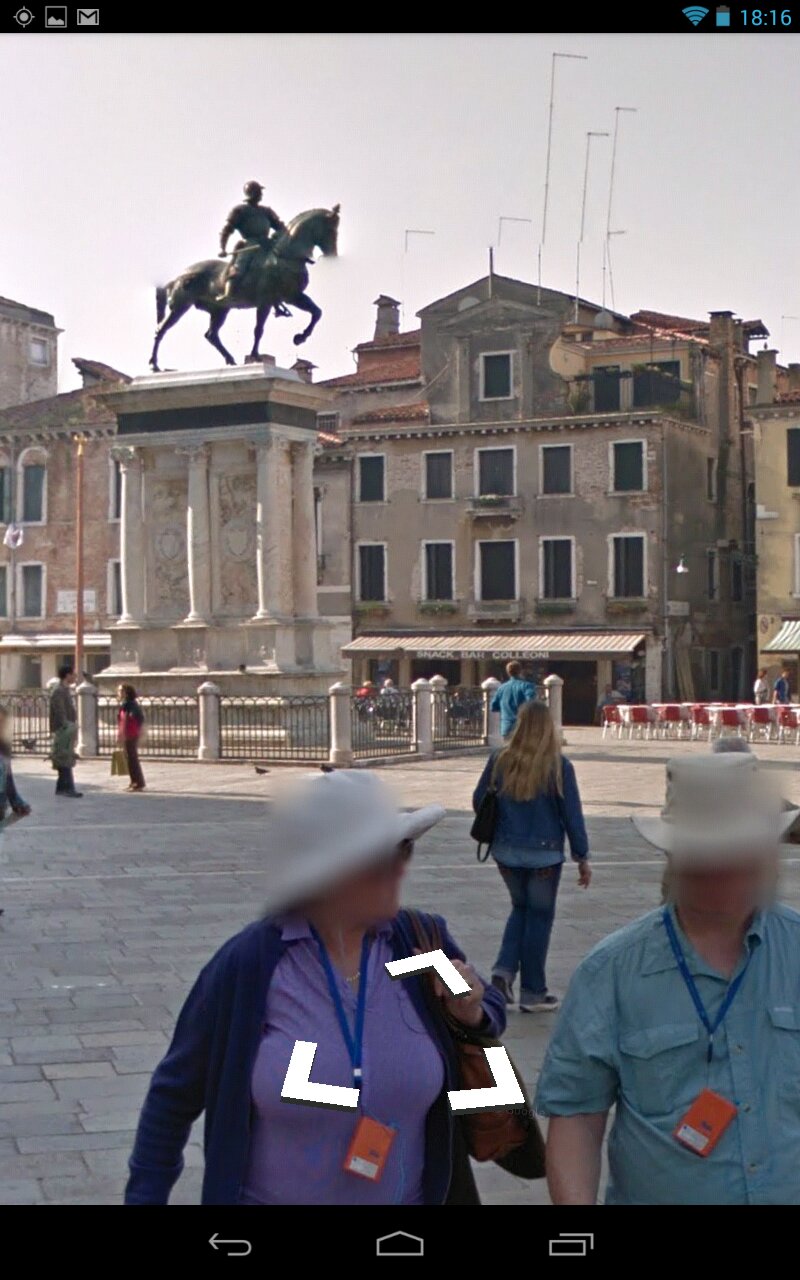
Back in April I posted some photos of the Google Street View backpackers that I met around the city. Now that the Google Street View of Venice is live, I can finally see the photos they took of me.
I was wearing blue jeans, a blue soft shell jacket and a small black backpack. Here I’m walking away after taking the above photo.
 And as I passed her before taking the photo, phone ready to shoot:
 And these are probably my legs down there. Somehow they’ve mislaid the rest of me.
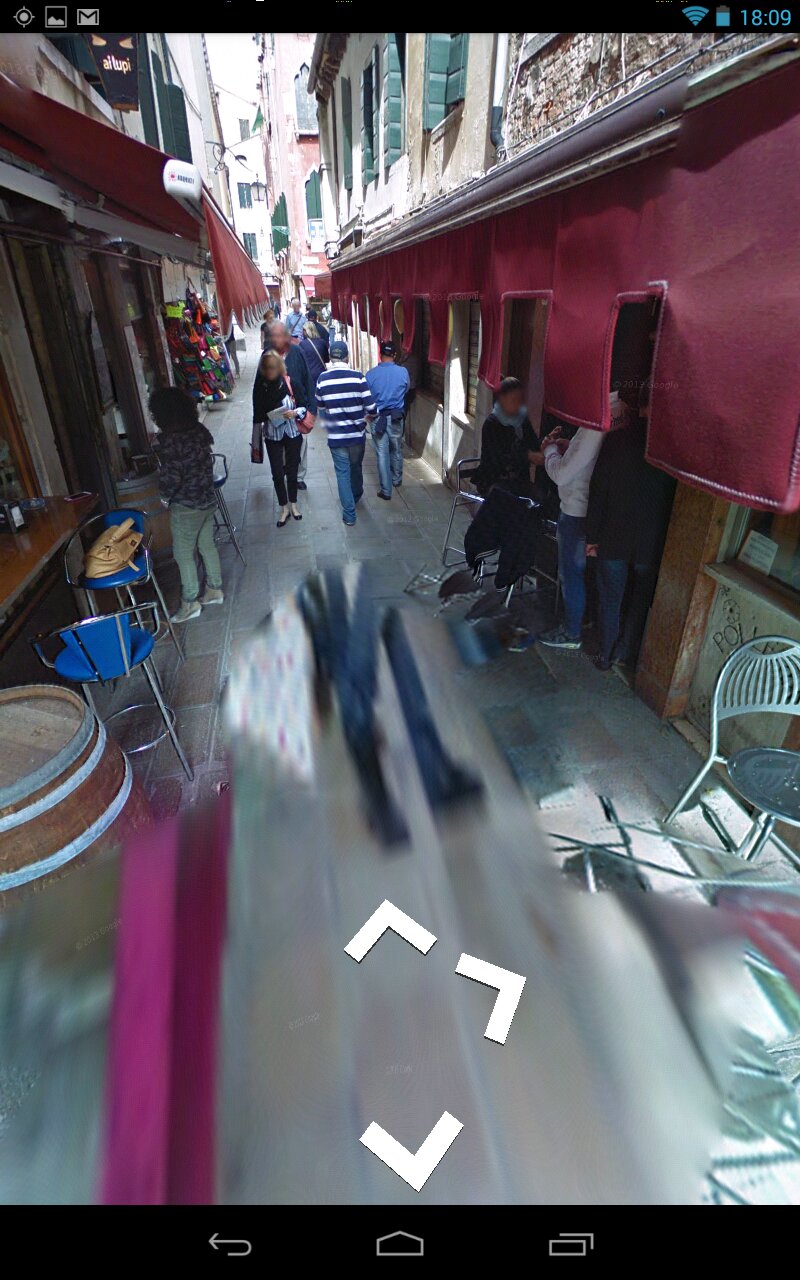 From the Campo SS. Giovanni e Paolo there’s just a cameo appearance as I walk away after having taken a few photos of the Google guy.
-

Winter project: rowing a gondola
My winter project this year is to learn how to row a gondola well enough to move around the canals of Venice.
For now, however, we’re rowing in the area of the Certosa, Vignole and Sant’Erasmo Islands in the lagoon.
-

A bit of high water

Corte Bressana at 105cm 
Campo Giovanni e Paolo 
Water at the edge of the square 
Ospedate Civile 
Ospedale -

Venetian mystery solved

Who took the lion’s share …

Of feline dental care?
He did!
(the lions are on the side of the Punto della Dogana in Venice) -
The death of an island
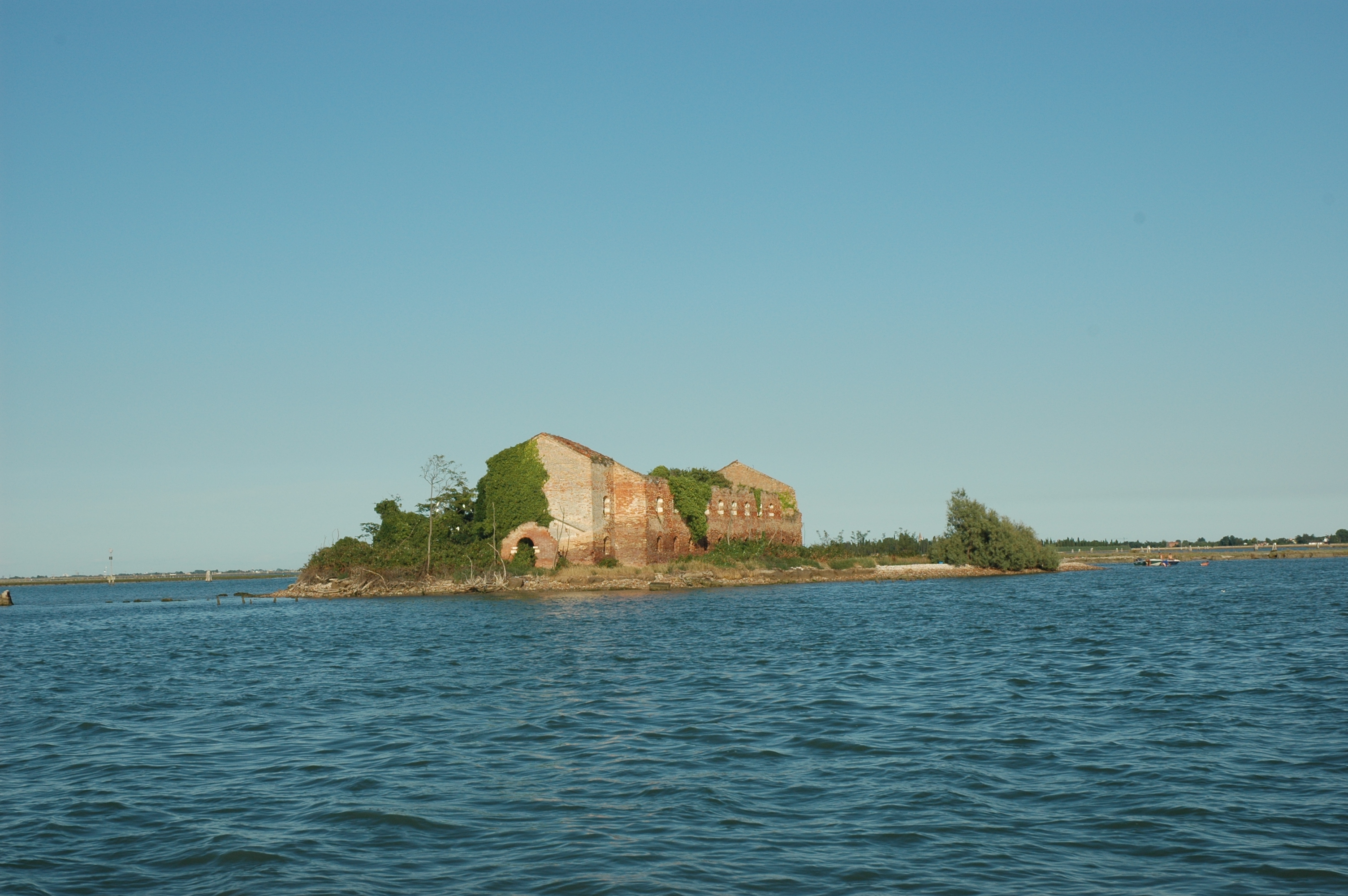
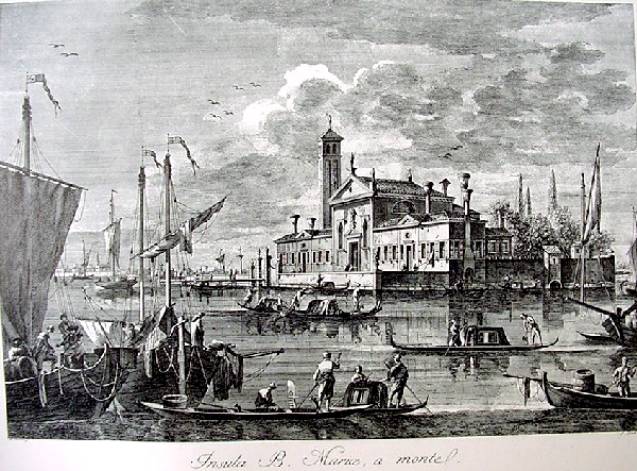
The island Madonna del Monte, aka Madonna del Rosario, is a small island in the Venetian lagoon, located on the canal which connects Murano and Burano.
It is dying a slow death.
The islands housed a monastery for a period in the Middle Ages, but then lay abandoned for centuries, until another monastery was founded in the early 18th century. It lasted just one century before being closed and demolished by Napoleon, like so many other monasteries.
In the 19th century it was used for gunpowder storage, and the current building dates from this period.
It is now suffering from death by waves.
It once had a perimeter wall, but the intense motor traffic on the nearby canal has caused that wall to crumble and little of anything is now visible to the casual visitor.
Once the wall is down, the constant waves quickly erode the sand and dirt the island is made of. The trees and shrubs near the edge die because of the salty water washing over the shore, and without the roots of the plants there is nothing left to keep the island together.
The island is getting smaller and smaller each year.
These photos give an impression of the size the island had a few decades ago:


Notice how much space there is in front of the building.
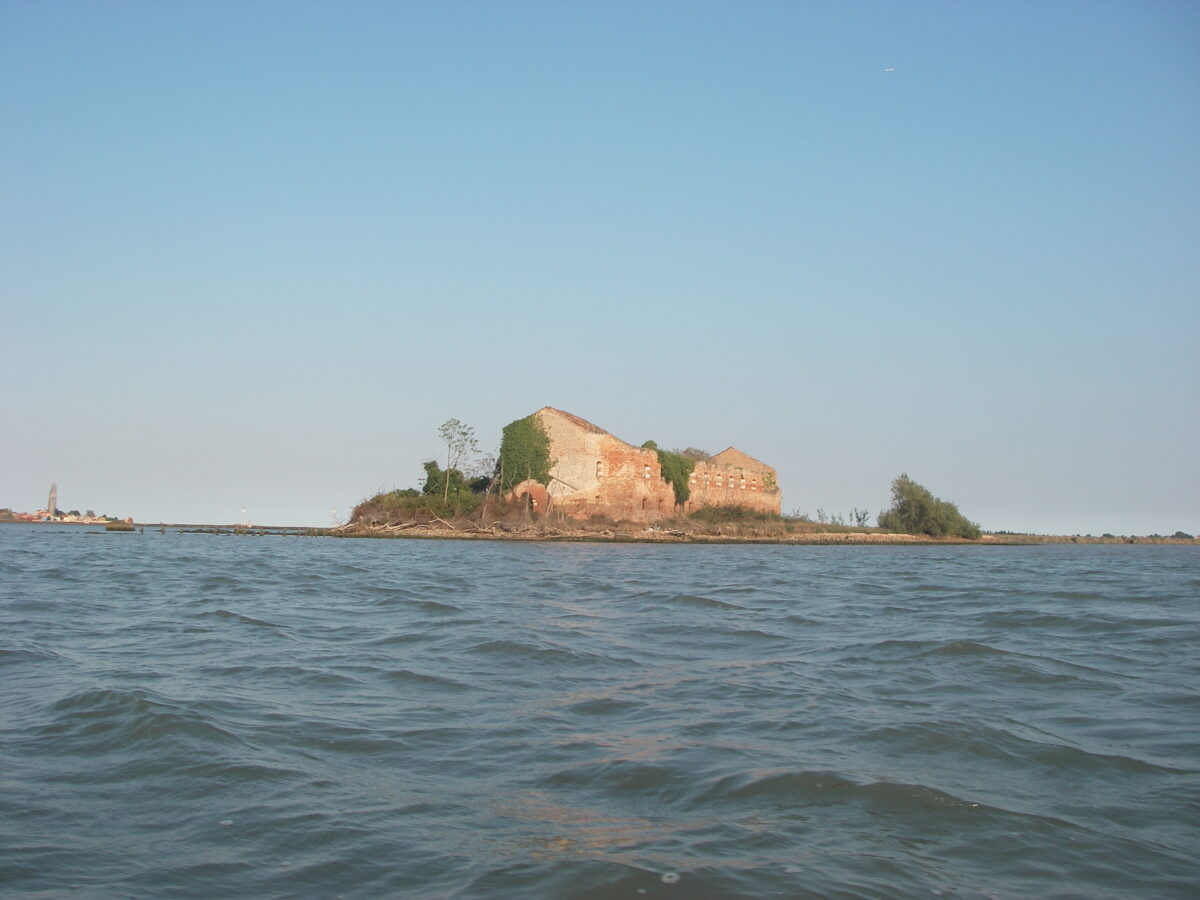
Here are some of the photos I have taken of the island in the years I’ve been here in Venice.
2007
There are still a few metres of land in front of the entrance, but most of the trees are dead, probably because the soil has become too salty or too moist.

2008
At least two metres in front of the entrance, but the dead trees are gone, though there’s some vegetation left.
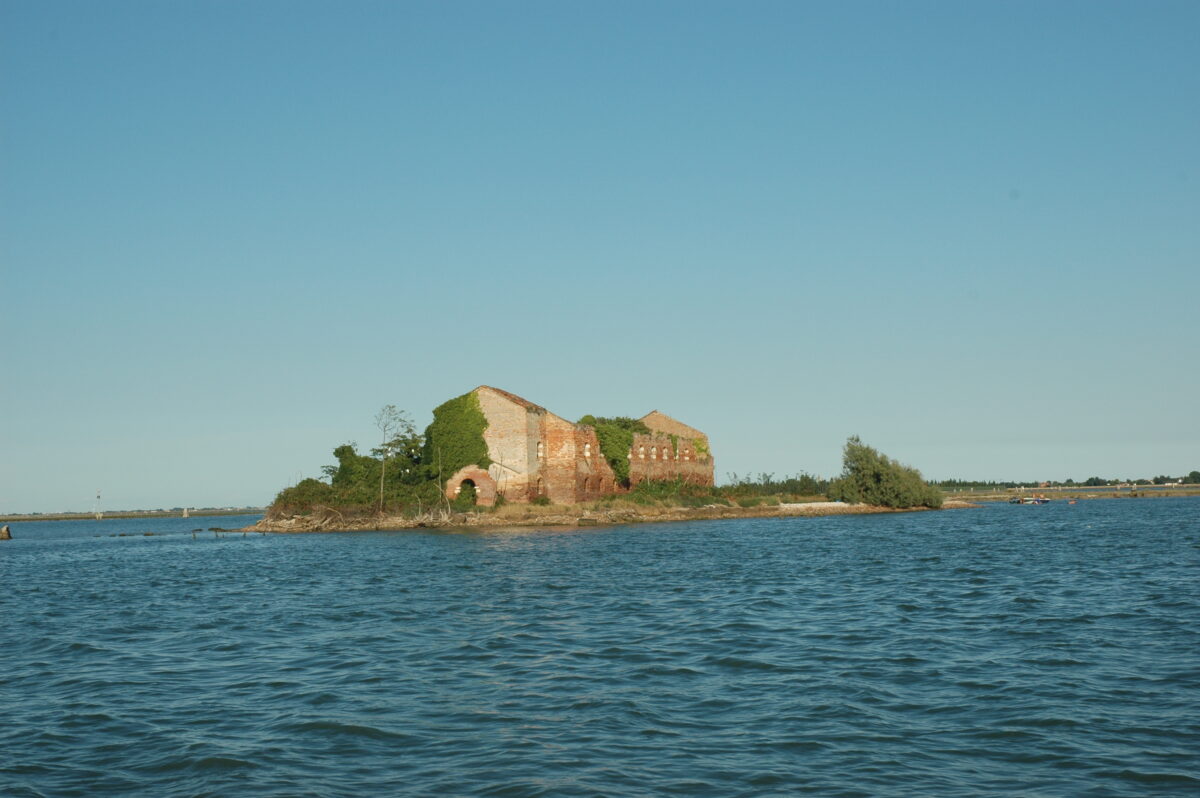

2009
No trees left, and maybe one metre of land left.
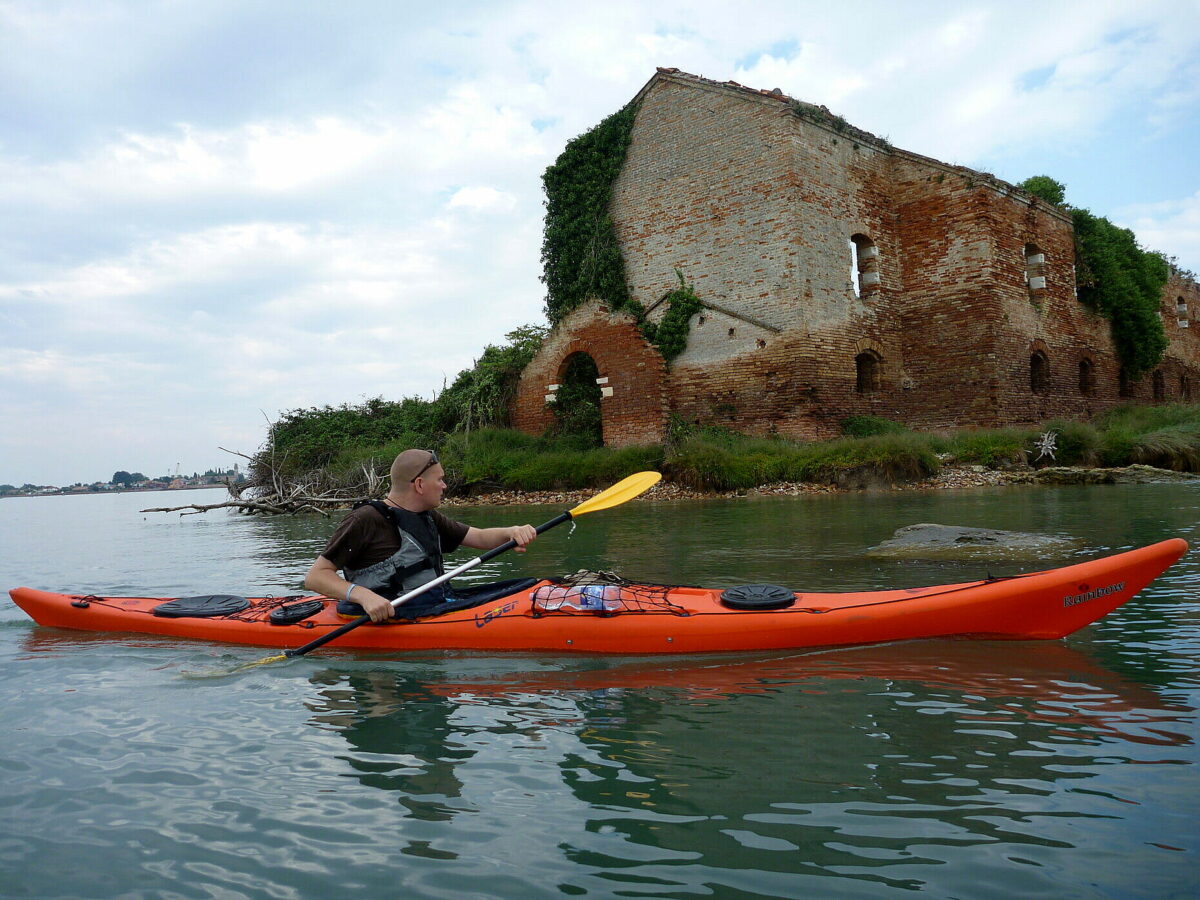

2011
No vegetation and at most one metre land in front of the entrance.
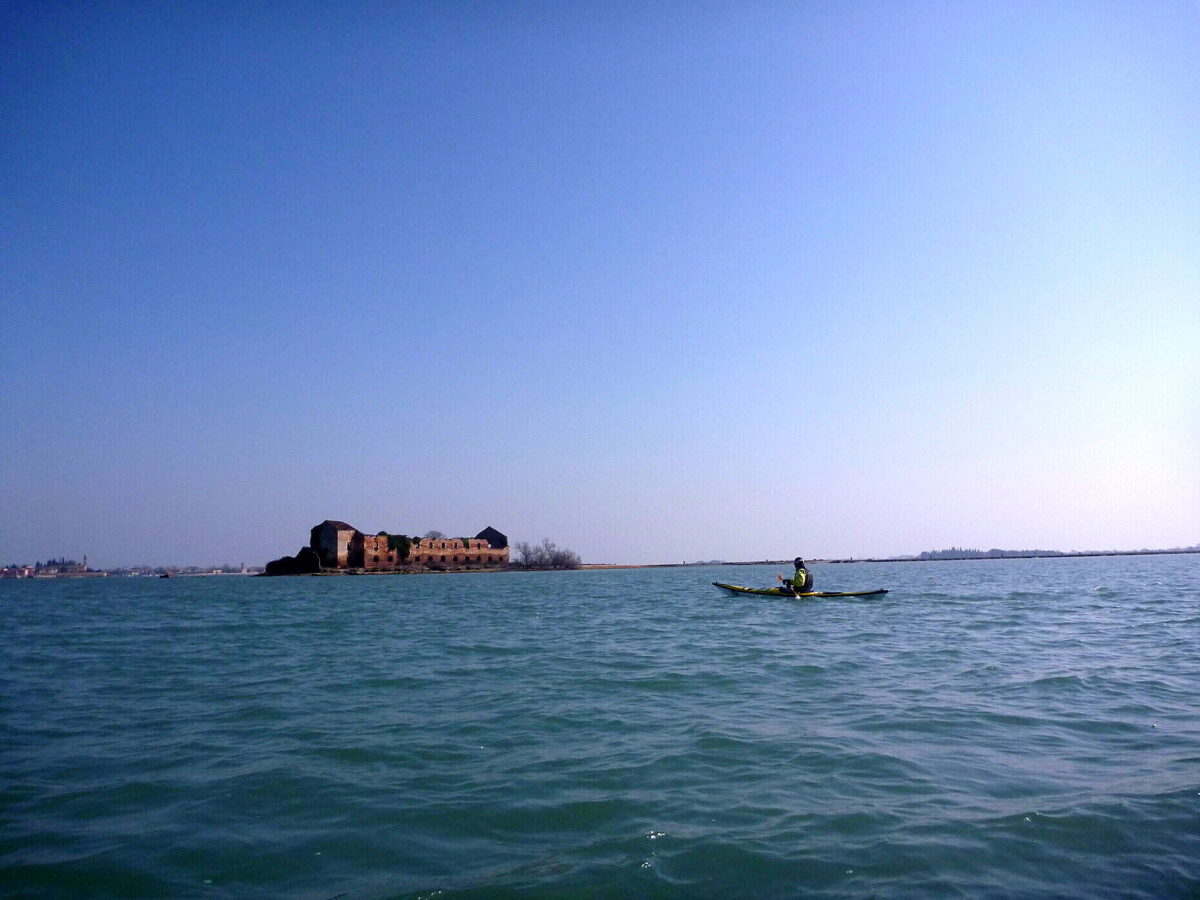

2012
This is the best photo I could find from 2012, and it’s not clear.
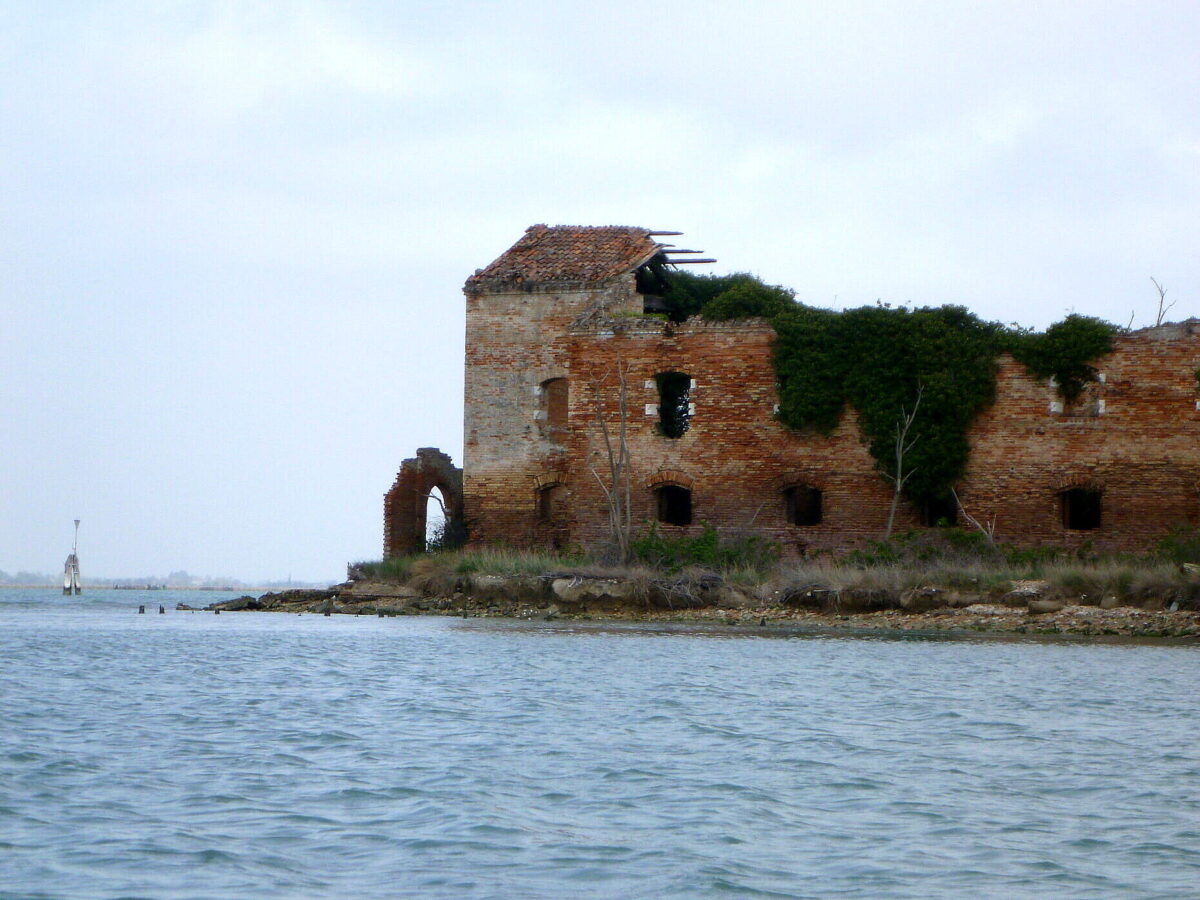
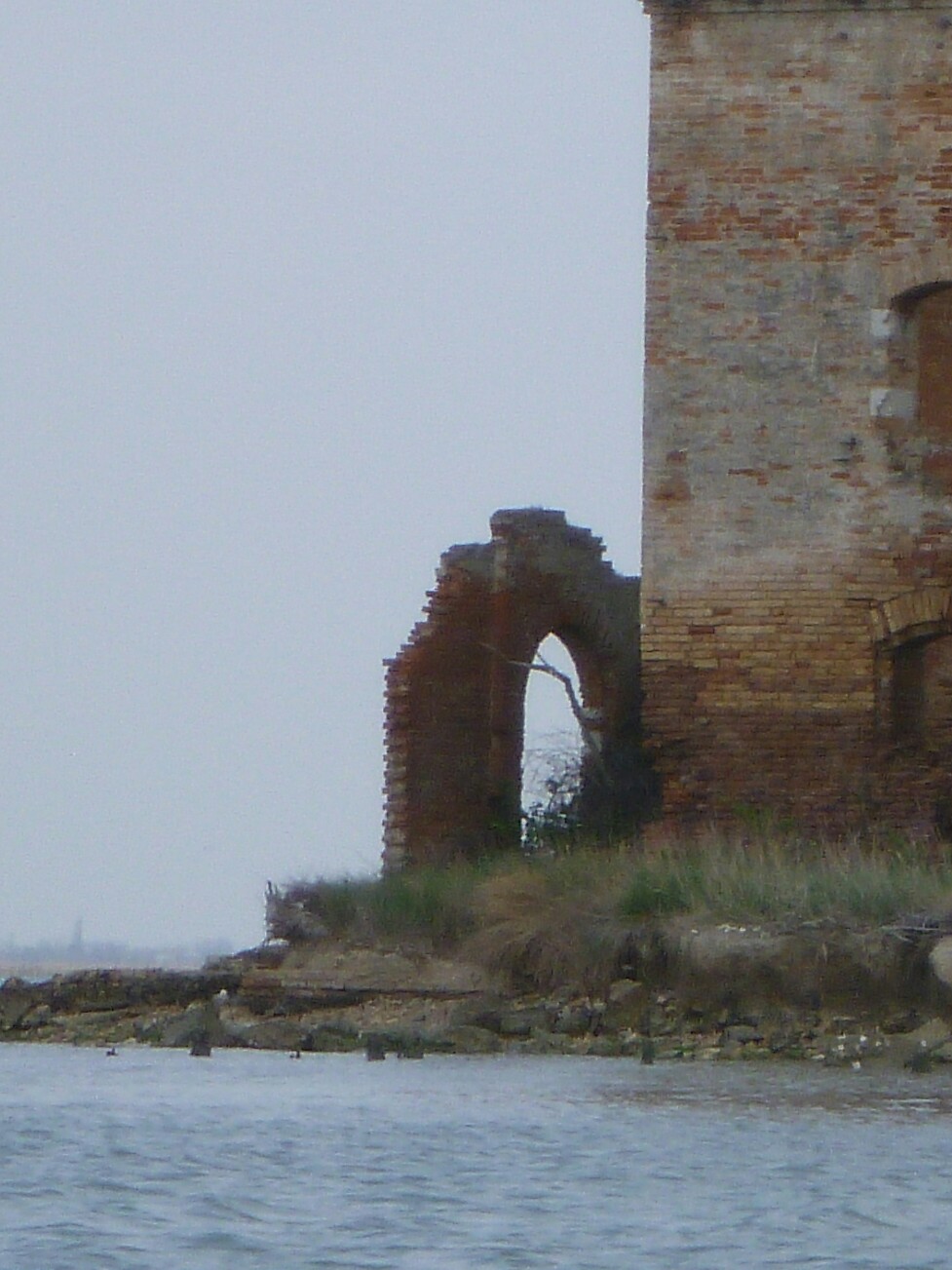
2013
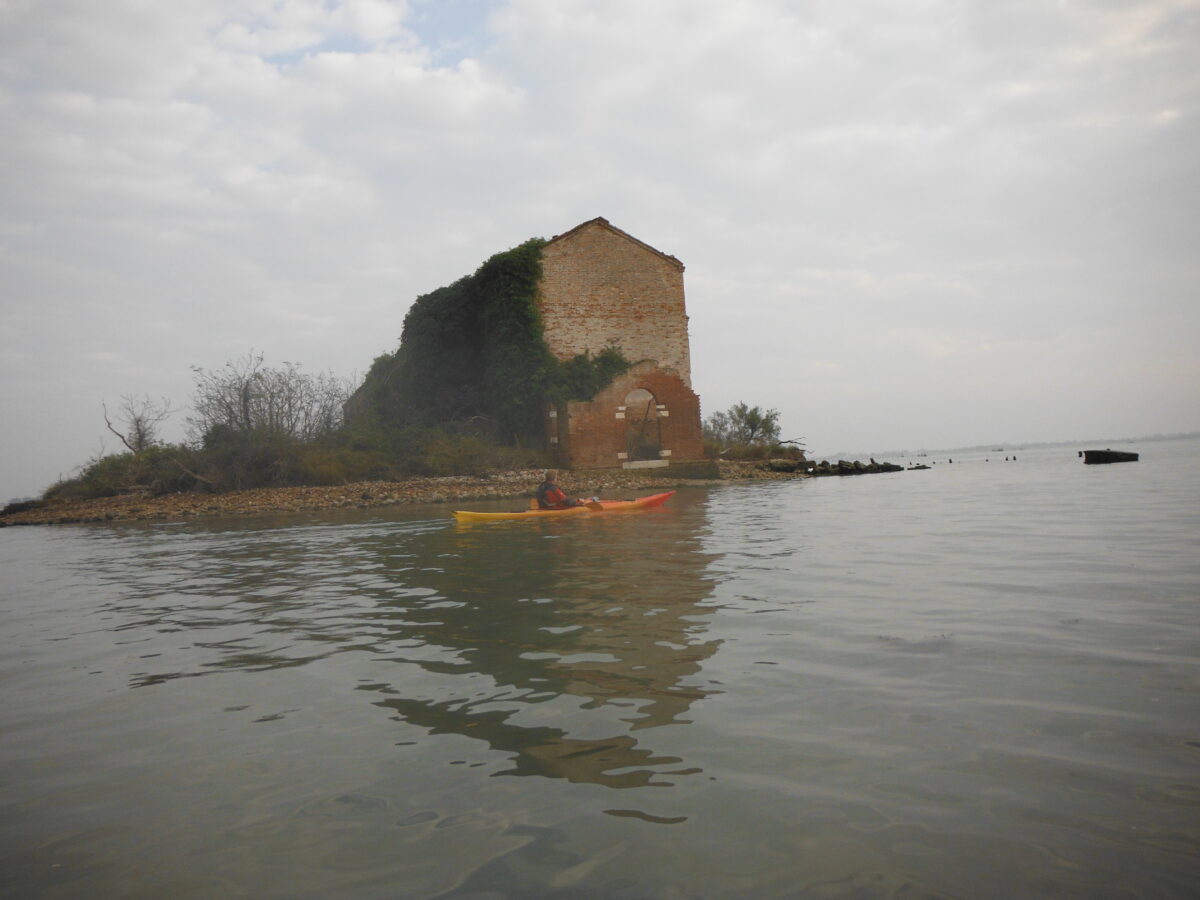
-
Two months ago a German died in a gondola
Two month ago today a German tourist died in a gondola besides the Rialto bridge. The city administration announced a plan of 26 points which should bring some order to traffic on the Canal Grande. These included separation of traffic, so cargo boats could only work until around 10.30am, while the gondolas could only work after; platforms and moorings were to be removed; taxis couldn’t pass the Rialto when not on turn; tourist caravans of taxis or gondolas would be limited; and many other changes. The general idea was that everybody would have to give up something for the common good. The common good does not exist in Italy, however. Even if the city had made agreements with the gondoliers and with the (city owned) public transport company ACTV, in the end almost everybody has renounced the plan. The cargo haulers object to the time limits and say they will have to work from 4am to be able to deliver the goods within the limits, and even then it won’t work because many shops open later in the morning. The taxi drivers object to the restrictions on speed (apparently they actually want to be able to go faster than the current 5 km/h limit nobody respects) and to the limits on tourist services for large groups with taxis cruising down the Grand Canal side by side. The taxi drivers are particular enraged by the activation of the ARGOS traffic surveillance system for handing out fines automatically for boats speeding. The gondoliers don’t want their stations moved and don’t want any further restrictions on their working conditions. They also object to having to install a GPS in the gondolas, which will make the gondola identifiable through the ARGOS system, and to having to wear an identification tag so their clients can complain if they feel treated badly. The common ground between these groups are that the existing rules and regulations are sufficient if just enforced, and that the city administration has failed in enforcing them efficiently. The city administration tries to hold its ground against this formidable opposition. In the end it all boils down to a conflict between the interests of the residents of the city, and the interests of the people living off tourists. The residents want more than everything else fast and reliable vaporetto services, so they can get to and from work and other engagements. Most residents rely entirely on public transport, because it is almost impossible to keep a boat in Venice. The people who live off tourism want to do everything they’ve done so far with the least possible disturbance from the residents. They’d like to see public transport reduced to a minimum because its in their way. Now, the gondoliers, taxi drivers and cargo haulers are residents too, right? Not necessarily. The municipality of Venice has some 300.000 inhabitants of which only 60.000 lives in Venice proper. That’s 20%. There are further municipalities around Venice with a substantial population, with easy distance of Venice. Many gondoliers, taxi drivers, cargo haulers and other people who work in Venice, don’t actually live there. The same goes for the cruise harbour, which allegedly supplies an income to over 9000 persons, but from what I hear less than 200 of these actually live in Venice. For a lot of the people who makes a living of Venice, the city is little more than a cow to be milked, and as long as it survives their working lifetime, they couldn’t care less how it fares. In fact, a lot of people who see themselves as ‘Venetians’ are with their actions actively killing the city and making it less liveable. Venice will not be dead when the mosaics in the San Marco basilica crumbles, but when the last real residents move away from the city. This exodus as been going on for decades, and it won’t stop unless there’s more focus on the practical needs of the real residents of Venice. -

The Gondola Zoo
As I was walking the dog this morning down in our campo, watching the gondolas being readied for the day, I hear one of the gondoliers moan “oh, here comes another group” and speedily retreat away from the boats. Shortly after they arrive, a group of 30-40 tourists, Russian sounding, probably from a cruise ship, all with a blue wireless audio receive so they could hear the guide speaking. In about 20 second time they have formed a crescent shaped wall around the two gondolas, taking turns to pose in front of them got their Venetian holiday shot.
The gondoliers ignore them, knowing too well that they will get no work from that kind of group, but they will still have to put up with being reduced to being a picturesque extra for the holiday photos of a group of people of which half probably don’t know for sure which city they’re in and why is special.
After having assured that the gondoliers haven’t been able to work for 15-20 minutes the group moves on, and life in the campo returns to normal.
-
Why Venice Residents Say “No” to Big Ships in The Lagoon | Italy Magazine
This article covers most of what I tried to write in my previous post. http://www.italymagazine.com/featured-story/why-venice-residents-say-no-big-ships-lagoon -

Cruise invasion of Venice
This weekend some 28 cruise ships and ferries will arrive in Venice. On Sunday alone, 12 cruise ships will arrive, of which 8 are huge, all in all carrying over 40.000 passengers. This might all be good. After all, 40.000 passengers have money in their pockets, which means business for Venice. Its not all that simple, though, even if some of the players would like to make it seem so. The ships have a huge environmental impact, visually, in the air and in the water, and it doesn’t seem like the tourists actually spend a lot of money in Venice. The problems The visual impact of these ships is obvious to everybody. Some of the cruise ships are 300m long, 50m wide, 50m tall with a draught of 12m. In comparison the facade of the Palazzo Ducale is less than 100m. If you’re standing on the island of San Giorgio Maggiore (just in front of St. Mark’s), when one of the giants passes, you cannot see Venice anymore. Air pollution is an issue too. Measurements of the origin of microparticles in the air, shows that one third comes from the cruise liners and ferries passing Venice centre, while some 15% originates with other boat traffic in the city, and the remaining half comes from sources on the mainland. Just one big cruise ship pollutes like 15.000 cars, even if it carries ‘only’ 5.000 persons. Having eight of twelve of these pass through Venice in one day, is like having a busy motorway run in front of St. Mark’s. One of the major environmental problems in Venice are the waves produced by all the boats. The big ships don’t really make much of a wake. In the Canale Giudecca and in the Bacino San Marco they move so slowly that they’re not causing any noticeable waves. Rather the water behind them is extremely turbulent. I’ve paddled fairly close behind them at times, and small boats are tossed around like ping pong balls by the turbulence. However, when moving through the narrow canals their volume displaces a lot of the water, and they’ have a tsunami like effect on the city. Water is sucked away before the ship passes, it can drop by as much as a foot. As the ship passes, the water rushes back, washing up walls and fondamente. I’ve seen this happen on the beach on the Certosa island where me company is based, and the same phenomenon is seen in other places close to the Canale Giudecca, such as the Square Tramontin (an ancient gondola shipyard) and in the workshop of Saverio Pastor, one of the few remaining makers of oars and forcole. Hidden from view, under water, I can only imagine the effect of these continual fluctuations of water pressure on the ancient foundations of the city. Water will be sucked out of every crevice, to be pushed back in again. Every time some microscopic piece of Venice will be taken away forever, but when something finally gives way and collapses or subsides, who will be able to prove it in court? Finally there’s the issue of money. The ships being in a lot of people and they’ll spend some money Venice. That must be good. I know for certain that my local bar makes a good deal out of the groups of cruise passengers that regularly swarm down on the place. Certainly taxi conductors, gondoliers, tourist guides and others also make good money from the cruise passengers. My own company gets clients from there too. However, it doesn’t seem like they’re a good business for the city overall. Most of them stay and eat on the ship, and don’t spend more on Venice than the tourist coming in for just one day by bus or train. They’re referred to here as “mordi e fuggi” (hit and run) tourists. Even the association of hotel owners in Venice have come out saying that they’d rather be without the cruise tourists, as they spend very little compared to other categories of tourists. Those who do make money from the cruise ships are, besides the cruise lines who are multinationals, the harbour authority of Venice and the company running the passenger terminal. The actors The harbour authority of Venice is the main benefactor. It is no doubt a good deal of their business serving the incoming cruise ships. Harbour fees, supplies and other services. This should be good for Venice. Only the harbour of Venice is not venetian. It is a state harbour. It is managed from Rome, and the money will go to Rome with little regard to local wishes and desires. Venice gets nothing economically from the activities of the harbour. The stretches of water the ships pass from the Adriatic to the cruise terminal, the Canale San Niccolò, Canale San Marco and Canale Giudecca, are under the jurisdiction of the harbour authority, therefore Rome, and not Venice. The city of Venice can do nothing to influence the activities of the harbour authority, and it can do nothing to impede the passage of the ships, and hence nothing to avoid the damages the spa cause to Venice, the city and is residents. The harbour authority will do whatever it wants, as long as it has backing in the ministries in Rome, and the city can do nothing. The sense of impotence in the face what many locals see as yet another plunder of the city by far away powers, is palpable, and today there has been huge protests against the large number of shops coming in this weekend. After the capsize of the Costa Concordia on the Tuscan island Giglio, there been a lot more attention on the issue of cruise liners paying though the centre of Venice. It has become a very hot political potato. Most seem to agree that the current situation is not tenable, even the harbour authority has accepted alternative solutions must be examined, and several different models have been suggested. Some try to find alternative routes to the existing passenger terminal, while others want the ships moved to other locations. I’ll try later to describe the different suggestions.