


 Photos from Rio di Santa Marina, on September 14th, 2009 – a fairly humid day in Venice.


 Spotted on Burano along the Fondamenta Pescheria on September 28th, 2009.


 When you hear the siren you better move – or even better – keep to the sides always, as any rowed boat is expected to do in the Canalazzo.
The photos were taken on September 5 on the Canal Grande just in front of the City Hall, Ca’ Farsetti, very close to the Rialto Bridge.
This is not a regular occurrence. I have only seen it twice this year, and I do spend a good deal of time around the Canal Grande.

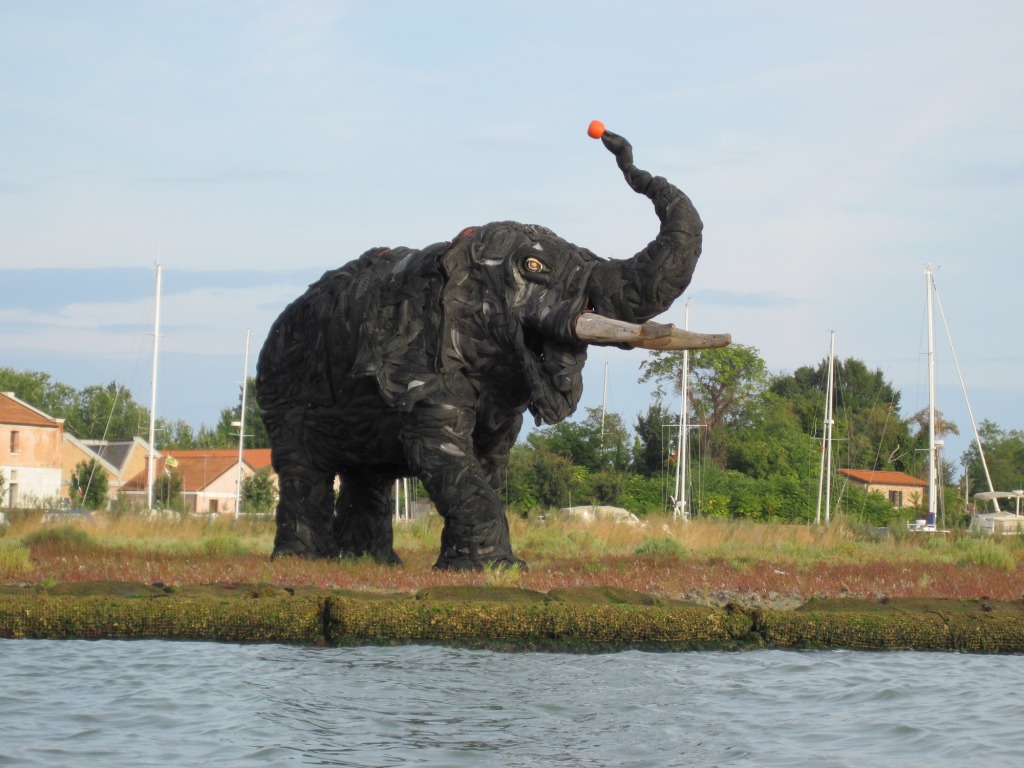
 There has been a larger than usual mammal on the loose in the lagoon this summer.
The life size elephant stands on a shallow island near the Certosa island, just east of Venice, on the canal that leads to the airport. Most boats pass at a distance, but we can paddle right up under its trunk. It doesn’t seem to mind, though.
It appeared there in early June, just at the opening time of the Biennale, so it probably has something to do with that. If that’s the case, it will likely disappear in November when the Biennale closes.
Seen up close it looks like its made from old car tyres, heated and moulded into shape, and some pieces of drift wood.
 Some have suggested that the little red ball is like a key stone on an arch. Remove that, and it’ll all come apart 🙂



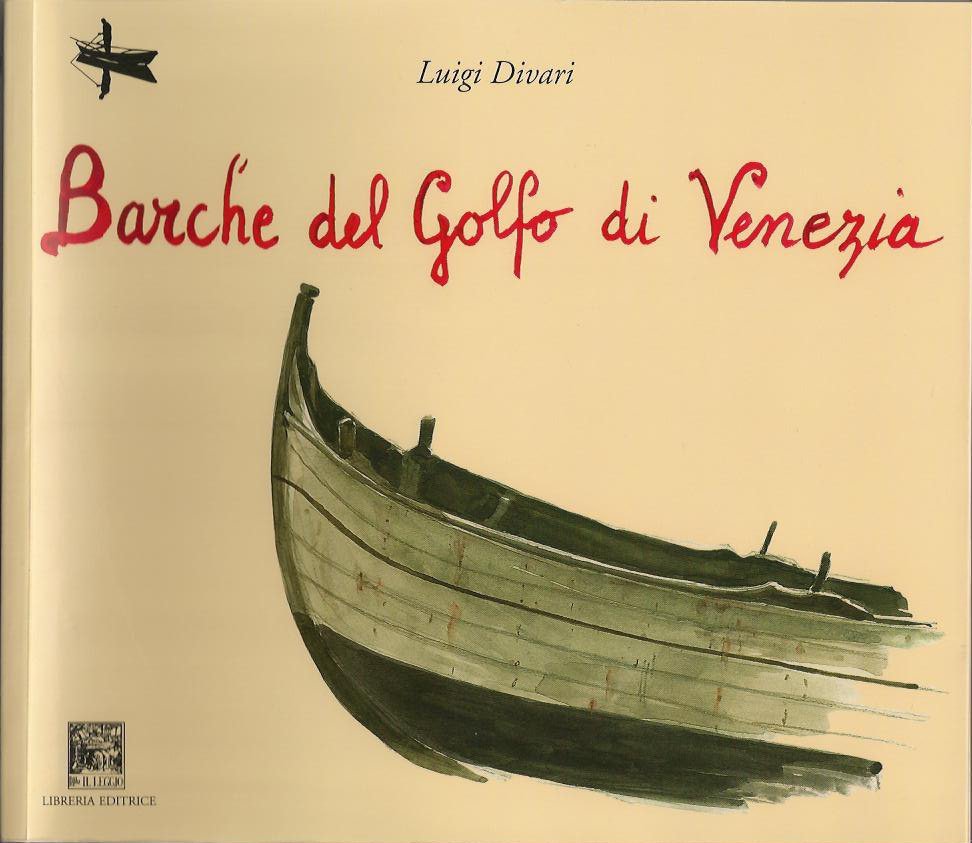 The various chapters describe not only the different types and classes of boats, both rowed and sailed, but also many of the now disappearing crafts associated with boats and sea faring in the lagoon area, and quite a bit of the practical, social and cultural context in which the boats were made and used. Many of the vessels are no longer used, and of some not even a single complete hull has survived.
The entire book is generously illustrated with beautiful water colours made by the author.
The text is in Italian with words, phrases and quotations in Venetian.

 Luigi Divari, Barche del Golfo di Venezia, 2009, ISBN 9788883200878, Il Leggio Libreria Editrice, Sottomarina di Chioggia (VE), Italy.

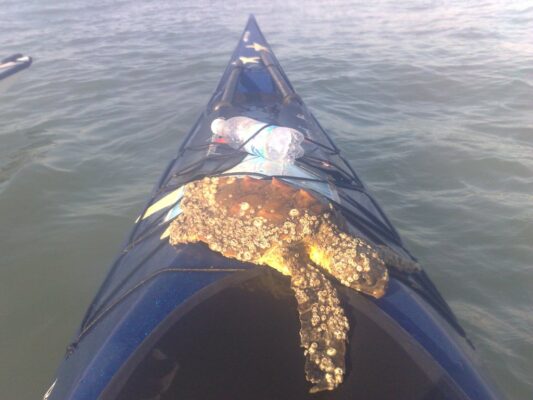
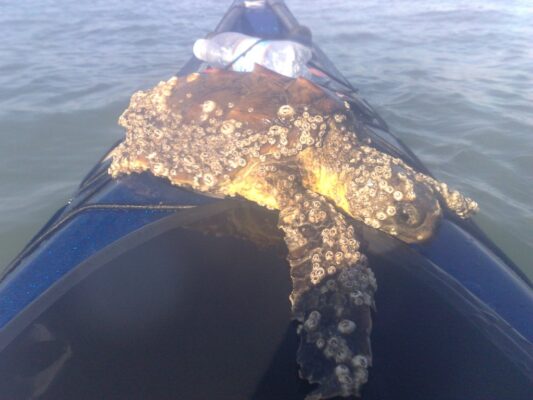 It looked barely alive when I picked it up, it hardly moved, but I took it to a more sheltered and shallower place and let it go, and it started swimming again.
I have no idea which species it is. The size matches the European pond turtle, but I have never seen one of those with spines on the back like the one has.
 The sign reads: “Pied a terre of 50 mq, completely restored with high quality details”.
Even though I was looking for a place to live at the time, it probably wasn’t just that pied a terre I was looking for 🙂
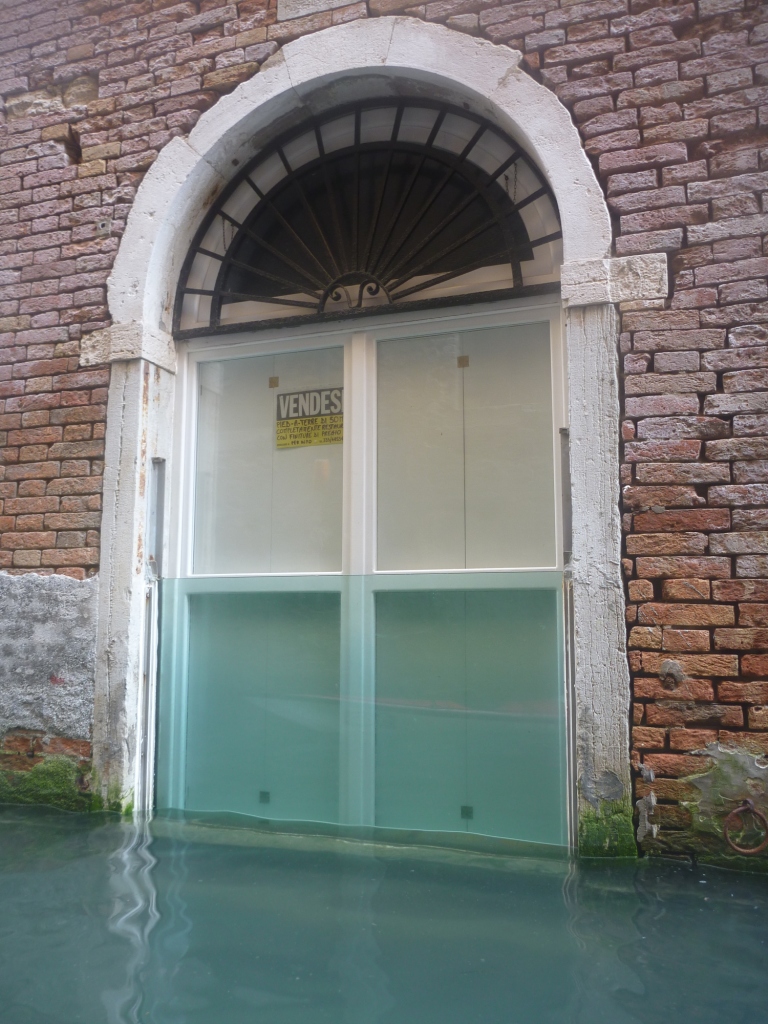 Pied a terre or pied dans l’eau ?
The spot is on the Rio de Verona on a little used stretch between the Fenice and the Rio Malatin / Rio Sant’Angelo.


